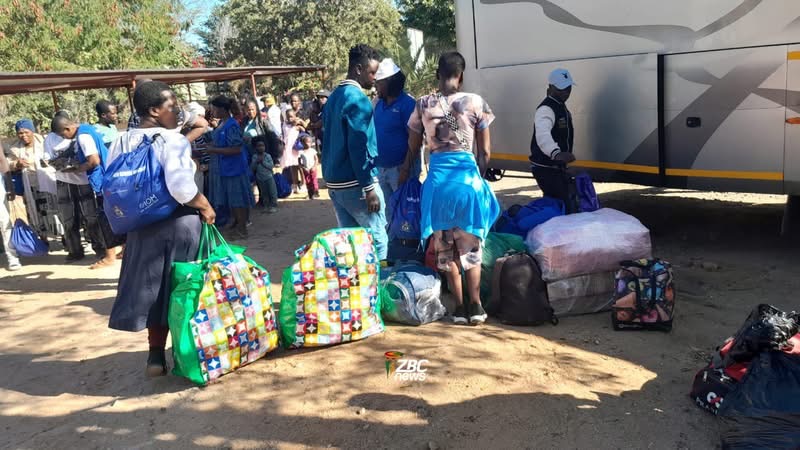
BEITBRIDGE — Zimbabwe repatriated 74 citizens from South Africa by road on Sunday as xenophobic violence targeting African migrants spread across the country.
The repatriation makes Zimbabwe the latest country to pull nationals out of South Africa in the wave of unrest, joining Malawi, Ghana, Mozambique and Nigeria, which have collectively evacuated hundreds of citizens.
Emilia Tochi, who returned home to Mashava, described the chaos she had fled.
“Where we are coming from, the situation is tense, and the community we were living in doesn’t consider whether you are documented or not. You are just told to go and, if you show them your documents proving that you are legal in that country, they tear the documents. But now we are safely home,” she said.
Teddius Masendeke, of Mutoko, fled Mossel Bay in the Western Cape – the same area where Mozambique said five of its citizens were killed.
“People are being beaten, and locals are looting everything. We found refuge at the police station,” he said.
Many of the returnees said they had only minutes to gather their belongings before fleeing, leaving most of their property behind.
“It was a matter of picking what you have and seeking refuge in safety halls. Now we feel safe here because we have a home,” said Theresa Sibanda, who was returning to Harare.
The International Organisation for Migration documented the returnees and facilitated their onward journeys from Beitbridge.
Zimbabwe has a large migrant community in South Africa, estimated in the millions.
Anti-immigrant groups have set a June 30 deadline for foreigners of African extraction to leave the country.
South African President Cyril Ramaphosa on Sunday pledged to crack down on groups he accused of exploiting public frustration over immigration to pursue political and criminal agendas.
“We will act against forces who are exploiting the concerns of our people about illegal immigration to further their own political, personal and criminal agendas,” Ramaphosa said in a televised address, without specifying the measures to be taken.
“We will and must not allow groups to use the legitimate concerns of South Africans to destabilise our country through inciting lawlessness and violence,” he added.
He cautioned citizens against stopping people on the streets to demand their identities, saying enforcement of immigration laws was solely the responsibility of the state.
Xenophobic attacks are a recurring problem in South Africa, where immigrants are frequently blamed for economic grievances including high unemployment and crime. Advocates for migrants say such accusations are unjust and have long been weaponised by populist politicians.