HARARE — A Harare father has filed a High Court application challenging a government directive that caps the number of Ordinary Level subjects a pupil can register for at nine, after his academically gifted son was forced to drop three subjects he had already paid for at Mutare Boys High School.
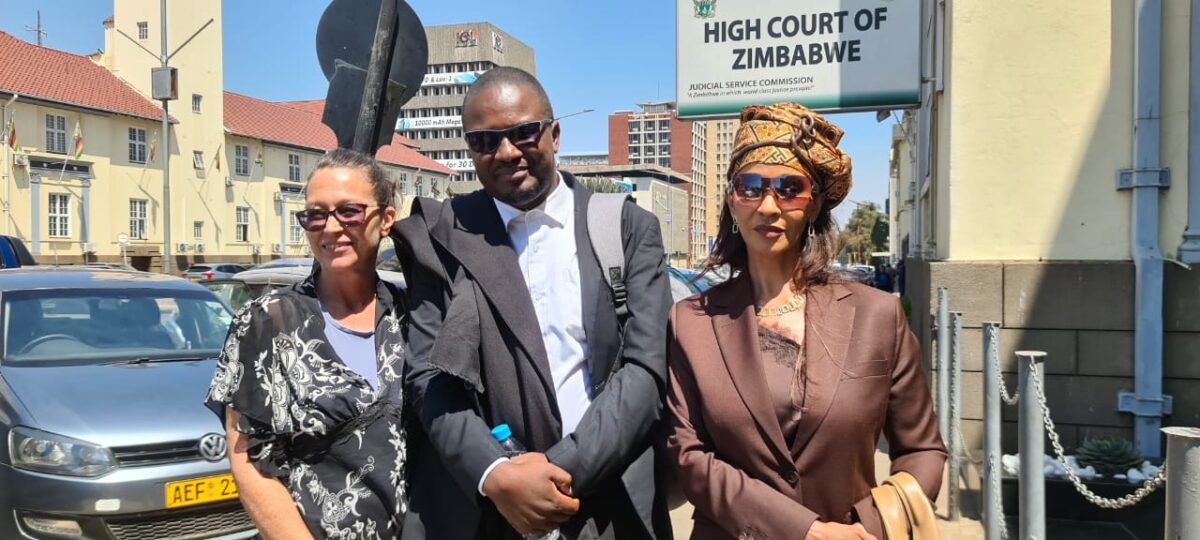
Walter Mutowo, acting in his personal capacity and as the natural guardian of his minor son Anesu Mutowo, filed the application on Wednesday.
The application, prepared by Lenon Rwizi of Hamunakwadi & Nyandoro Law Chambers, names ZIMSEC, the minister of primary and secondary education, and Mutare Boys High School as respondents.
Mutowo, in his founding affidavit, says he registered his son for 12 O’ Level subjects and paid the full examination fees on March 16, 2026.
Eight days later, the school’s head informed him that a new policy directive required Anesu to reduce his subjects to nine. The directive, he was told, was drawn from a policy document titled the “Heritage Based Curriculum Framework,” jointly issued and enforced by ZIMSEC and the ministry of primary and secondary education.
“To my utter shock, on March 24, 2026, I was advised by the head of Mutare Boys High that, pursuant to a new policy directive, they are forced to reduce his registered subjects from 12 to nine,” Mutowo says in the affidavit.
The circular underpinning the directive, Secretary’s Circular No. 10 of 2024 signed by ministry secretary Moses Mhike, states that the recommended maximum number of learning areas for study per pupil is nine at O’ Level and three at A’ Level.
Mutowo argues that neither the Zimbabwe School Examinations Council Act nor the Education Act empowers ZIMSEC or the minister to place such a cap on the number of subjects a learner may sit for, making the directive beyond their powers and therefore unlawful.
Mutowo also argues the cap violates Section 75 of the constitution, which guarantees the right to education, and Section 68, which enshrines the right to administrative justice. He further contends the sudden implementation of the directive after his son had already registered, prepared for, and paid for 12 subjects constitutes a violation of the boy’s legitimate expectation.
He further argues that capping subjects at nine is “profoundly unreasonable” and “actively harms academically gifted candidates.”
“It stifles intellectual curiosity and forces high-achieving learners to abandon disciplines that could shape their future professional endeavours. The State is effectively legislating a ceiling on intellectual excellence,” Mutowo says.
Mutowo also points to what he describes as a financial conundrum: ZIMSEC accepted his payment for 12 subjects on March 16, only to enforce the cap eight days later, leaving him forced to either apply for a partial refund for the three excluded subjects or withdraw his son entirely and re-enrol him at a centre that permits more than nine subjects.
The draft order filed with the application asks the court to set aside Clause 3.3 of the Heritage Based Curriculum Framework, direct that Anesu be allowed to register and sit for all 12 subjects he paid for in March, and order ZIMSEC and the minister to pay costs jointly and severally.
Zimbabwe’s education system has historically allowed O’ Level and A’ Level candidates to sit for an uncapped number of subjects. The Heritage Based Curriculum Framework 2024–2030, introduced under Secretary’s Circular No. 10 of 2024, replaced the previous Competence Based Curriculum and, among other changes, set the subject ceiling for lower secondary pupils.
The tension between the cap and high-achieving students has surfaced before. In November last year, a student from Pamushana High School in Masvingo sat for 12 A’ Level subjects and scored 56 points. It later emerged that the school had to seek special permission from ZIMSEC for him to sit some of the exams after other students had taken the tests, due to scheduling clashes.
The matter is pending.