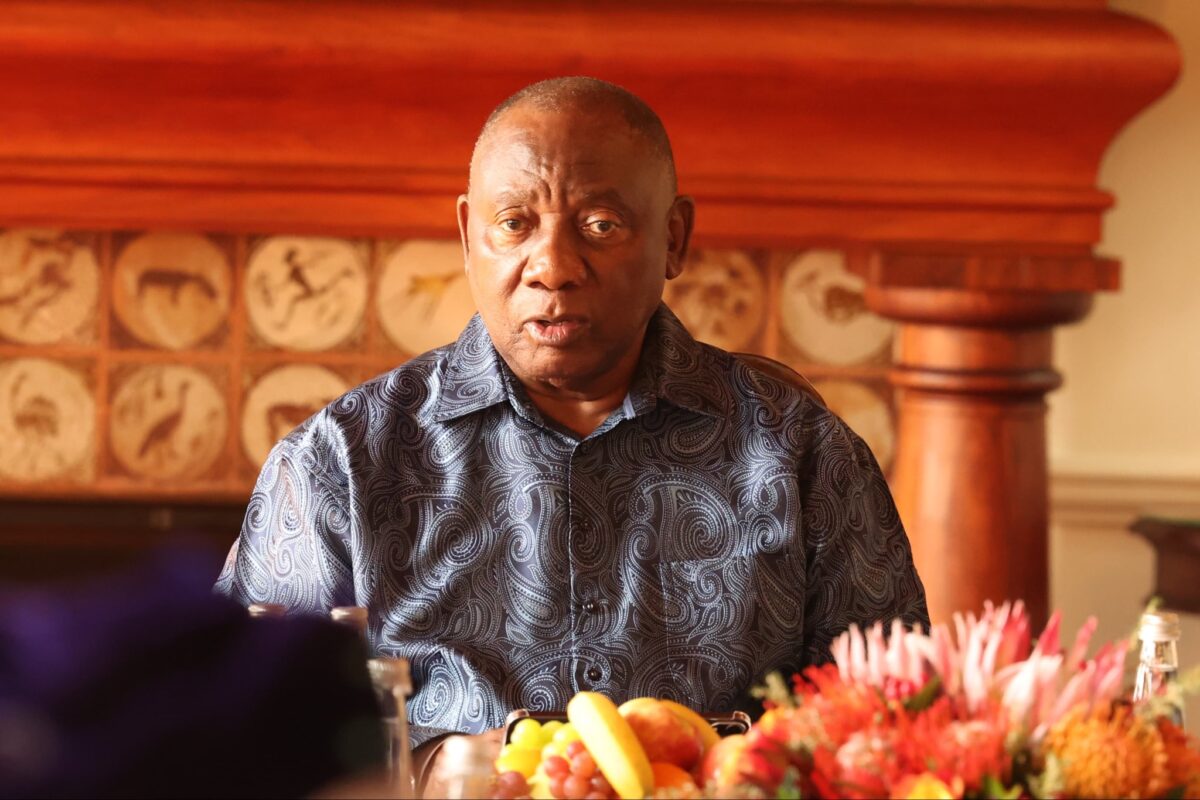
CAPE TOWN, South Africa – President Cyril Ramaphosa has warned against vigilantism, xenophobia and any attempts to destabilise South Africa, stressing that enforcing immigration laws remains the responsibility of the state and not of private citizens.
Ramaphosa was speaking to the National Council of Provinces (NCOP) on Thursday ahead of nationwide protests called by anti-immigrant groups on June 30.
He said while the government had identified illegal immigration as a significant challenge, South Africans should not take the law into their own hands.
“We have also said that responsibility for enforcing our laws rests with the state, and that no individual may stop any person to demand documentation or proof of identity or nationality,” he said.
Ramaphosa said South Africa remained committed to upholding human rights and protecting all people within its borders.
“There is no place for sexism, for xenophobia, for Afrophobia, or any other form of intolerance,” he said.
Ramaphosa said his government had already put measures in place to address illegal immigration through strengthened law enforcement, border security, immigration reforms and regional cooperation, but cautioned against actions that could fuel social tensions or undermine the rule of law.
“We have put in place security and other measures to deal with any attempts to destabilise our country, whether by citizens or foreign nationals, and we will not tolerate any attempts to destabilise the country by anyone, whether marching or otherwise,” he said.
Ramaphosa said security agencies remained on high alert and were prepared to respond to any threats to public order.
“Our security forces are ready, and those who transgress the measures that we are putting in place will definitely meet the might of the law,” he said.
Ramaphosa said the government was prepared to maintain law and order, with the South African Police Service (SAPS) working closely with other law enforcement agencies, including metro and private security, ahead of the planned demonstrations.
Ramaphosa expressed confidence that South Africans would reject violence and unlawful conduct.
“I am a strong believer that South Africans are peaceful people. They are not xenophobic, they are not Afrophobic as well, and they want peace,” he said.
He said citizens wanted to go about their daily lives without disruption, and that leaders across society had a responsibility to promote calm and stability. He called on political leaders and communities to work with government and law enforcement agencies to prevent any attempts to destabilise the country.
“Where there might be people who want to destabilise the country, we should speak out. We should take whatever action that is necessary on a legal basis, and work with our security forces, and work with our government officials,” he said.
Ramaphosa reiterated that while government remained committed to tackling illegal immigration, all actions had to be carried out within the confines of the law and in a manner consistent with South Africa’s constitutional values and human rights culture.