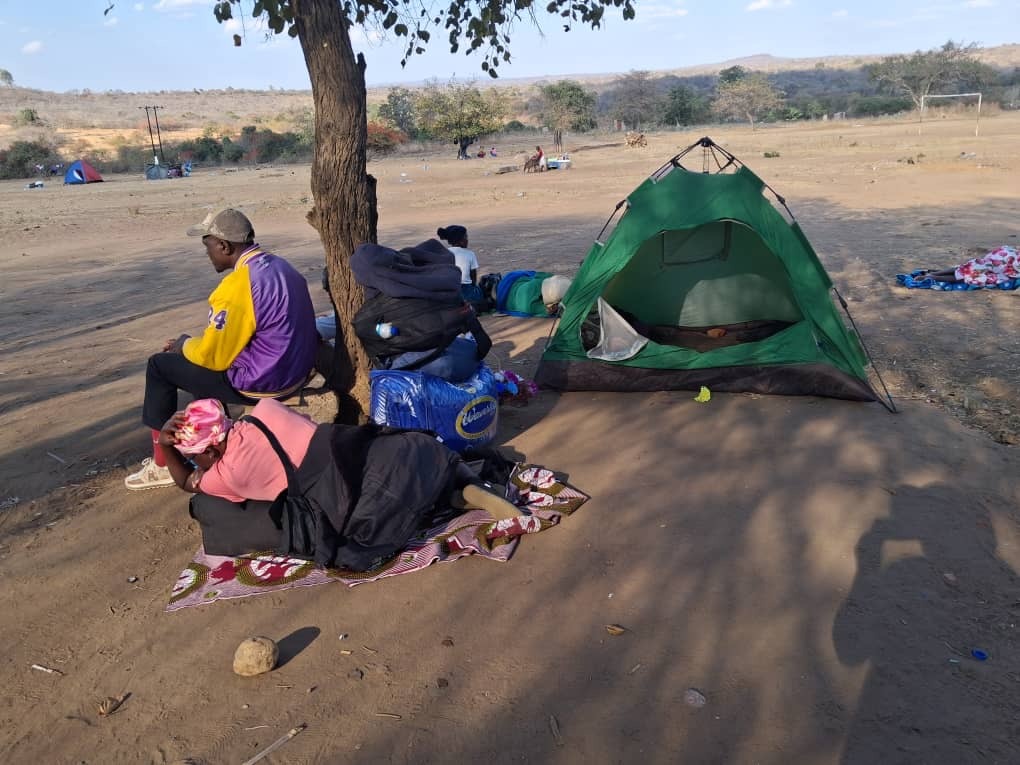
KARANDA — At 3PM, Chipo Sosera is eating her first meal of the day — half a loaf of bread and a 500ml soft drink she shares with another woman beneath a musau tree outside Karanda Mission Hospital.
The 63-year-old has slept under the same tree for 14 days while her grandfather receives treatment at the hospital, surviving on what little food she can afford and seeking shelter when it rains.
Nearby villagers offer visitors a basic meal and a place to lay their heads for the night for about US$1. It sounds little, but for Sosera, whose stay has stretched into a second week, even that is difficult to sustain.
“If it’s five days, where do you get the five dollars? The problem comes when it rains,” she says.
Sosera is among patients and relatives who travel long distances to Karanda because of its reputation for affordable and reliable health care, only to confront another problem once they arrive: how to sustain themselves while treatment can take days or weeks.
“We come here. Karanda gives good health care. They handle patients well,” Sosera says.
A few meters away, the entrance to the mission hospital bears the inscription: “To the glory of God that All might know him.”
Outside the gates, business is brisk. Vendors sell food and other goods while taxis ferry patients along the route to the hospital.
The constant flow reflects the reach of a 150-bed rural hospital whose patients come not only from across Zimbabwe but from neighboring Mozambique, Zambia and Botswana. Karanda says its mission is to provide “excellent, accessible, affordable, quality and compassionate health services.”
Its statistics show the scale and growth of demand.
Karanda recorded 113,744 outpatient visits in 2024, up from 99,957 in 2023 and 93,105 in 2022 — an increase of about 22% in two years. The hospital also recorded 6,470 inpatient admissions, 2,086 institutional deliveries and 3,774 operations in 2024.
Demand continued to grow in 2025. Karanda says on its website that it provided almost 140,000 outpatient services and recorded 7,500 inpatient admissions that year. The hospital says it handles about 3,800 surgeries and more than 2,000 deliveries annually.
In his Medical Director’s Report contained in Karanda Mission Hospital’s 2024 Annual Report, published in 2025, Dr. Paul Thistle described the pressure facing the hospital.
“The hospital is bursting at the seams; we are experiencing growing pains, difficult challenges and hard won successes,” he said.
“In 2024, we surpassed 100,000 total outpatient visits, and 2,000 deliveries in maternity. May not be Guinness world records, but they are most definitely Karanda’s records.”
Hospital Matron Emily Muchenje said the figures reflected an “ever growing volume” of patients traveling from across Zimbabwe and neighboring Mozambique.
“The hospital statistics below highlight the ever growing volume as patients travel from across Zimbabwe and from neighboring Mozambique seeking care at Karanda. For this reason, the renovation and expansion of clinical activities is so very important,” she said.
For patients and relatives who have traveled long distances to reach Karanda, however, the challenge does not end at the hospital gates.
Sosera, who comes from elsewhere in Mt Darwin district, is staying at Karanda to be with her grandfather as he undergoes treatment.
“My grandfather is not well,” she says. “I have been here two weeks sleeping under this tree. If the sun comes, it just hits me here. If it rains, we shelter where we can.”
Her decision to stay has also disrupted life back home. Sosera has four grandchildren in her care, and in her absence, the eldest, a 14-year-old, has been left looking after the younger children.
But with her grandfather still receiving treatment, Sosera says she cannot simply return home.
“It’s important that I be here,” she says.
Sharing Sosera’s meal beneath the tree is Netsai Makofi, who has spent five days at Karanda after traveling from Mbire.
The journey required two buses.
“We came with buses from Mbire. We got a bus to Mushumbi and then a bus to Karanda,” Makofi says.
Her husband is ill and unable to eat.
“He came in pain but there was nothing we could do. We had to come. I have been here for five days,” she says.
Makofi says she and others staying outside bathe in the nearby Ruya River.
“We bathe in the Ruya River,” Makofi says.
She says the experience points to the need for better-equipped health facilities closer to communities in Mbire and Dande. If the treatment her husband needed were available there, she says, families would not have to travel so far.
Some of those sleeping outside Karanda are patients themselves.
Grace Kafanja came seeking treatment for an injured hand.
“I came here yesterday because I injured my hand. I have had to join different queues for the different tests, and I still haven’t finished,” she says.
When night came, she remained outside.
“I slept where I am speaking to you, right here in the open,” she says.
Kafanja says moving through different queues for tests can stretch a visit across several days, creating another challenge for patients who must find food and somewhere to sleep while they wait.
Kafanja says she traveled to Karanda because a health facility closer to home could not provide the care she needed.
“The hospital nearby, Chitse Clinic, is inadequate,” she says.
Karanda has some accommodation for people who need to remain near the hospital, including an antenatal waiting shelter for expectant mothers from remote communities awaiting delivery.
Women can be seen accommodated both inside the shelter and in an outside area when numbers are high. But the accommodation needs extend beyond expectant mothers to relatives accompanying admitted patients and outpatients whose tests and consultations may stretch across several days.
The hospital has acknowledged the wider need.
In its 2024 Annual Report, published in 2025, Thistle said Karanda was “polishing plans to build a hostel for relatives and caregivers of patients.” The hospital also said its patient-family housing area had been renovated and improved and that its patient shelter was undergoing renovations.
For Sosera, Makofi and others staying outside the hospital now, however, finding somewhere to eat and sleep remains a daily struggle.
Some turn to residents living around the hospital, who for about US$1 provide a basic meal and somewhere to lay one’s head for the night.
Ketness Chikocha says the arrangement provides somewhere to sleep, but conditions can be crowded.
“They charge a dollar at these houses. They give you a place to sleep,” she says.
“In the room you can hardly turn. It will be packed with people. Some are coughing, and people have different illnesses.”
For those unable to find the dollar, the alternative is sleeping outside.
“We ask that we have shelter here so that we can sleep,” Chikocha says.
Chikocha says the large number of people using the toilets outside can also make them difficult to access. “You can see the toilets outside. There are so many people using them they quickly become overwhelmed. Sometimes you get there and there is no way you can use them,” she says.
Food is rationed according to whatever money remains.
“From morning we bought one drink and half a loaf of bread. That is what we ate,” Chikocha says.
Karanda also operates social welfare programs aimed at helping some of its poorest patients. Its 2024 Annual Report says more than US$43,000 was used to pay hospital bills for 340 indigent people, a 200% increase over 2022 levels.
But the experiences of Sosera, Makofi and Kafanja show that the cost of accessing health care does not end with the hospital bill. There is transport, food and somewhere to sleep for however long treatment takes.
Karanda’s growing patient numbers reflect the demand for its services. Its leadership has described the hospital as “bursting at the seams,” while plans for a relatives and caregivers hostel show it also recognizes the need for more accommodation.
For families arriving now, however, that need is visible beneath the trees outside its gates.
For the past two weeks, the musau tree has been where Sosera lays her head at night. When it rains, she looks for shelter elsewhere.
Her grandfather remains inside Karanda receiving treatment, and despite the hunger, the weather and the grandchildren waiting for her at home, Sosera says leaving him is not an option.
“It’s important that I be here,” she says.