KWAME Nkrumah was right: “Africa must unite” if the continent is serious about addressing the challenges of forced migration and internal displacement. Africans are, by and large, our own enemies when it comes to these problems.
We may ask why.
Who kidnapped the most able-bodied sons of Africa for the voyages across both the Atlantic and Indian oceans during the slavery period? It was African kings and chiefs’ raiding parties who captured them and handed them over to slave traders on the East and West coasts of Africa. Sons of Africa were then forced to work on sugar plantations in the Americas and the Caribbean, which sustained Europe’s appetite for sweetened tea.
Then came the Berlin Conference of 1884–1885, which partitioned and parcelled Africa without regard for the cultural and historical ties of the people who lived there. This colonial division created another layer of forced migration. The newly formed states later became the basis for conflicts and violence, in addition to natural disasters such as floods and droughts.
Before the creation of colonial borders, Africans moved freely across the continent without worrying about being labelled asylum seekers or refugees. The Bantu migration from West Africa through East Africa to present-day South Africa is a good example. The pre-colonial Munhumutapa Empire stretched from present-day Zimbabwe to the Indian Ocean coast of Mozambique.
Africans later fought protracted wars to free themselves from colonial rule, and these struggles also created waves of forced migration. Zimbabweans, for example, fled to neighbouring countries such as Mozambique, where they were sheltered in refugee camps like Chimoio and Nyadzonia, as well as Freedom Camp and J.Z. Moyo Camp in Zambia.
Within Zimbabwe itself, the Rhodesian colonial regime internally displaced Africans from places such as Rhodesdale Estate in the Midlands to the then tsetse fly-infested areas of Sanyati and Gokwe in order to create space for white commercial farming.
When Namibia gained independence from South Africa in 1990, Eritrea from Ethiopia in 1993, and South Sudan from Sudan in 2011, many believed a new era would emerge — one in which a politically free Africa would unite to confront the challenges of forced migration caused by natural disasters. Unfortunately, this has not happened.
This raises an important question: political freedom from colonial rule — but at what cost?
Pan-African thinkers such as Frantz Fanon had already warned about this danger as early as 1952 in his book Black Skin, White Masks. Similarly, Ndabaningi Sithole raised these concerns in his influential work African Nationalism, published in 1959.
These intellectuals realised that some African political elites admired how colonial rulers governed and intended to emulate them once they attained political power. They therefore sought to shape a narrative that would encourage the creation of a united Africa.
Instead, many African political elites maintained colonial state borders in their quest for political power, often rooted in corruption and the plunder of natural resources. In doing so, they perfected the art of creating conflicts and violence through civil wars, coups and the persecution of political or religious opponents.
African politicians also inherited and perfected the colonial strategy of divide and rule. This has forced many people to flee their homes in search of safety, either within their own countries or in neighbouring states.
This is the reality Africa faces today.
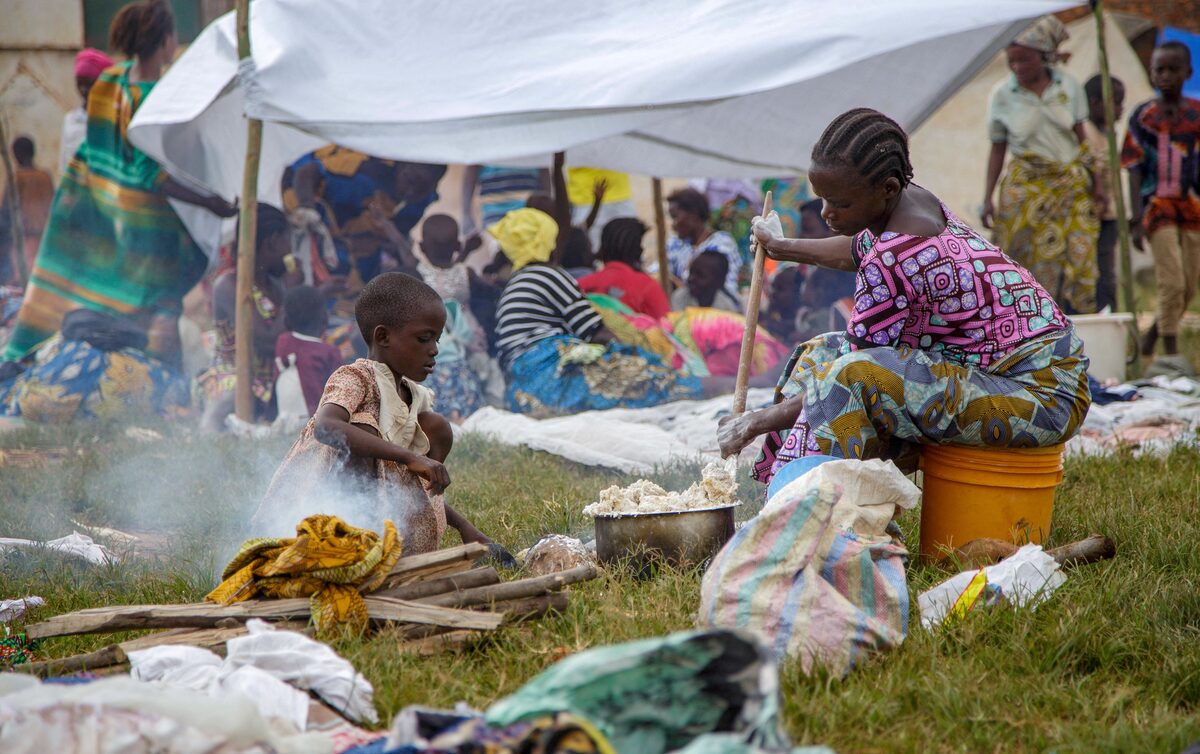
The Africa Center for Strategic Studies estimates that there were 46 million forcibly displaced people in Africa in 2025. Natural stressors have added another dimension to the crisis. Floods, cyclones, droughts and desertification have accounted for about 33 percent of forced displacement in Africa in recent years.
Cyclone Idai in 2019, for example, left a trail of destruction that displaced about 270,000 people in Zimbabwe. Some victims later migrated to South Africa, adding to the already large number of Zimbabweans who had fled the country following political violence beginning in 2000.
Elsewhere, religious persecution has caused internal displacement in Nigeria due to Boko Haram’s reign of terror.
For many migrants, the pattern is the same: they flee to neighbouring countries with stronger economies — Zimbabweans to South Africa, Sudanese to Egypt, and Somalis to Kenya.
Advocates of decoloniality such as Arthur Mutambara and Alexander Rusero recognise that many African presidents are reluctant to pursue the vision of a united Africa championed by Kwame Nkrumah and Muammar Gaddafi. The reason is simple: a united Africa could reduce them to less powerful positions within a continental government.
- For this reason, I believe that the 1969 Organisation of African Unity (OAU) Convention Governing the Specific Aspects of Refugee Problems in Africa was a reactionary response that sidestepped Nkrumah’s clarion call for African unity.