HARARE – CBZ Holdings plans to mobilise US$600 million to rehabilitate key highways linking Zimbabwe to regional markets, with the bank saying the country’s wider road network could ultimately require as much as US$5 billion in investment.
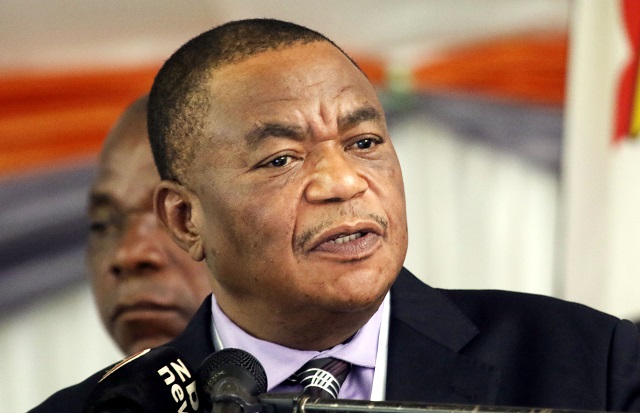
CBZ chief executive officer Lawrence Nyazema said the financial services group was preparing to deploy the first US$100 million tranche of a planned US$600 million infrastructure bond, with US$75 million already secured.
Speaking during a briefing with analysts in Harare on Monday, Nyazema said work on the roads could begin before the end of August, with the bank seeking to accelerate construction before the onset of the rainy season.
“We will start with the first 100 million. And if you recall, I said 75 million is already in place,” Nyazema said. “That’s where my confidence comes from when I say we should be able to start this basing before the end of August.”
The programme will initially target the Harare-Chirundu road, the Bulawayo-Victoria Falls road and the completion of the Beitbridge-Harare section, with CBZ planning to bring in regional and international financiers to expand the programme.
Nyazema said about 350 kilometres of the Harare-Chirundu highway would be targeted, particularly sections that have deteriorated badly.
“We are looking at 350 kilometres from Harare to Chirundu. Especially after Karoi, that road is in a deplorable state,” he said.
He said the project was not being driven solely by the prospect of financial returns, but by the need to improve the infrastructure supporting economic activity and regional trade.
“Ours is not just to make profit. We want to create the right environment for the economy to thrive. We also want to normalise the way our people live,” Nyazema said.
CBZ also intends to invest in the Bulawayo-Victoria Falls highway, which Nyazema said was crucial for tourism and regional connectivity.
“I’m told that some tourists from neighbouring countries are no longer able to access Victoria Falls by road,” he said, adding that preparations for the Junior Olympic World Cup, which Zimbabwe is expected to host next year, had added urgency to improving the road.
Nyazema estimated that upgrading the more than 400-kilometre Bulawayo-Victoria Falls road would require about US$450 million, based on an estimated cost of roughly US$1 million per kilometre.
The first phase of the US$600 million programme will also include about US$35 million towards completing the remaining section of the Beitbridge-Harare road.
“Remember I talked about Chirundu, it’s 350 kilometres. I also talked about finishing off Beitbridge. Let’s call it 35 million,” he said.
Nyazema said the US$600 million would only cover the first and second phases of a much larger infrastructure programme, given the scale of Zimbabwe’s road network.
“Because the road network runs into thousands of kilometres, it’s likely to be a continuing project,” he said. “Potentially the road network, for us to do it properly, will probably require up to five billion.”
He said CBZ did not expect to raise the entire US$5 billion at once and would instead roll out the programme in stages while bringing in international and regional financiers.
“That’s why I said we’ll be keen to get international financiers and regional financiers to also come in and participate alongside ourselves,” Nyazema said.
The bank plans to raise the remaining US$500 million through bond listings, including on the Victoria Falls Stock Exchange and potentially a regional or international exchange, with the aim of attracting foreign capital.
Nyazema said CBZ had deliberately chosen to begin with the US$100 million tranche rather than wait for the more complicated listing processes to be completed.
He said the remaining US$500 million would be structured while physical works were already under way.
CBZ expects to undertake preparatory work before the rainy season, with the larger financing package expected to be in place, or partially in place, by around February.
Nyazema said the private sector was stepping in because financing, rather than a lack of equipment or expertise, had been one of the major constraints to completing road projects.
“The engineers, the skills are there. What was missing was financing, because we were leaving everything to government. And this is us as the private sector saying, how do we also come in and ensure that the infrastructure deficits that we have in this country starts to be attended to.”
Nyazema said the proposed investments were also intended to strengthen Zimbabwe’s position along the North-South Corridor, which links South Africa with Zambia and other parts of the continent.
“If you picture what we are saying is from South Africa to Zambia, we are going to ensure that that north-south corridor is sorted out,” he said. “That’s a key trade route for the continent.”
CBZ said its infrastructure ambitions would extend beyond roads, with the group also pursuing property, housing and payments-related projects.