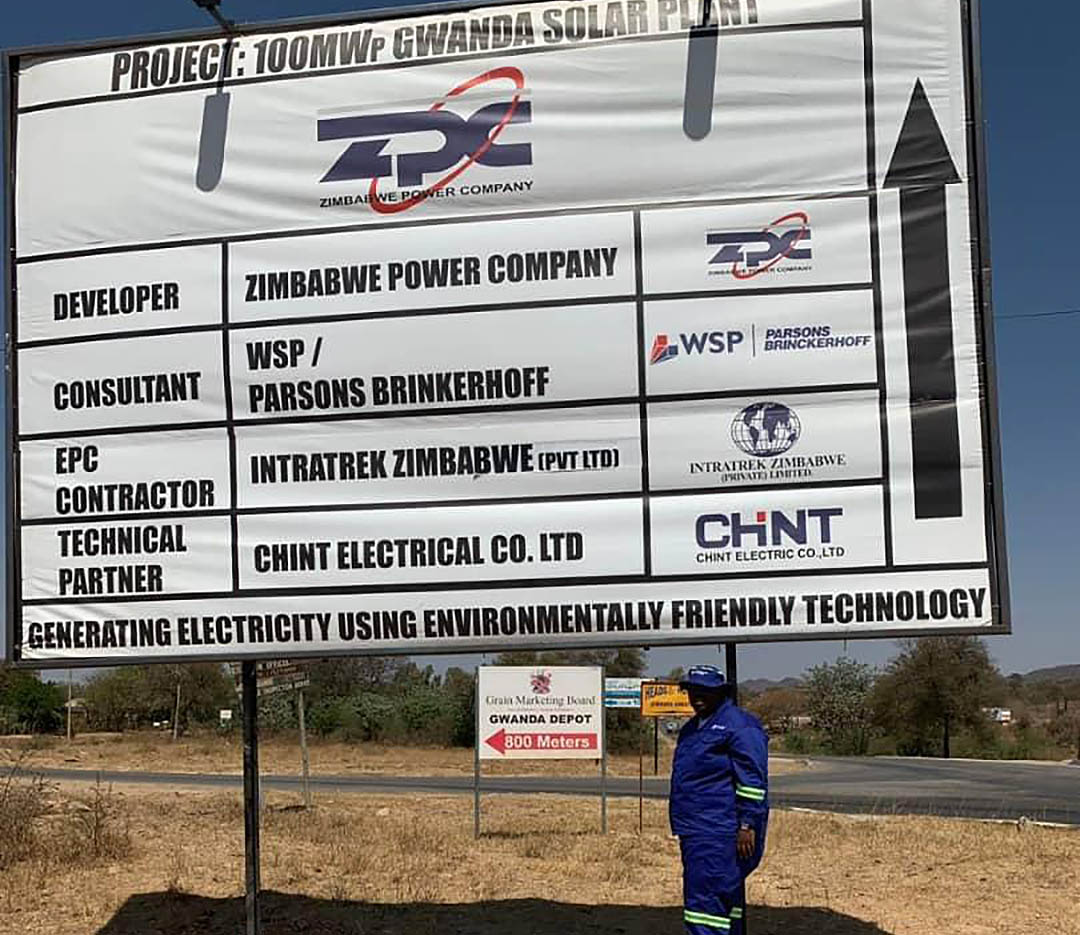
BULAWAYO – Wicknell Chivayo is getting a second bite of the cherry after ZESA ended its legal fight with him over the stalled 100MW Gwanda solar project and ordered his company to complete the power plant within 24 months.
ZESA and Chivayo’s Intratrek Zimbabwe have also renegotiated the cost of the project from the original US$172 million agreed in 2014 to less than US$132 million, citing the worldwide decline in solar panel prices.
ZESA subsidiary Zimbabwe Power Company (ZPC) recently wrote to Intratrek formally authorising it to resume work on the project.
“This letter serves as the formal Notice to Proceed with the full implementation of the contract,” ZPC said.
“Accordingly, the contractor is hereby authorised to commence execution of the works and to take immediate occupation of the project site in accordance with the conditions of the contract.
“The project duration shall be 24 months, in line with the agreed Programme of Works, as set out in the Engineering, Procurement and Construction (EPC) contract and its accompanying schedules. You are required to mobilise to the site and commence activities without delay.”
Intratrek and its technical partner, CHiNT Electric Co Ltd, were awarded the contract in 2014 after submitting the lowest bid against ZTE Corporation, Number 17 Metallurgical China, China Jiangxi International Corporation and Afriven Investments.
ZESA released US$5 million for pre-commencement works at the 200-hectare site in Gwanda, but cancelled the contract in 2018 after accusing Intratrek of clearing only 75 hectares and failing to meet agreed targets.
Chivayo was later arrested and charged with fraud over the project, but was acquitted.
The High Court in 2023 ordered ZESA to proceed with the contract or pay Intratrek US$22 million in default. ZESA appealed to the Supreme Court, but the appeal was dismissed, paving the way for the parties to return to the negotiating table.
The latest agreement effectively gives Intratrek another opportunity to deliver the long-delayed project, with ZESA set to release millions of dollars to the company as an “advance mobilisation payment”.
Intratrek will also be required to provide regular progress reports to the Office of the President and Cabinet to ensure compliance with the contract and timely execution of the works.
The Gwanda plant was conceived as part of efforts to ease Zimbabwe’s chronic electricity shortages, but more than a decade after the original contract was signed, the project has yet to generate a single megawatt.
Zimbabwe is currently producing an average of about 1,500MW against peak national demand of more than 2,000MW, leaving the country reliant on imports and load-shedding to bridge the shortfall.
Several independent power producers have been licensed to develop solar projects, but some have complained that the government has been slow to conclude power purchase agreements and provide the uptake guarantees needed to secure financing.