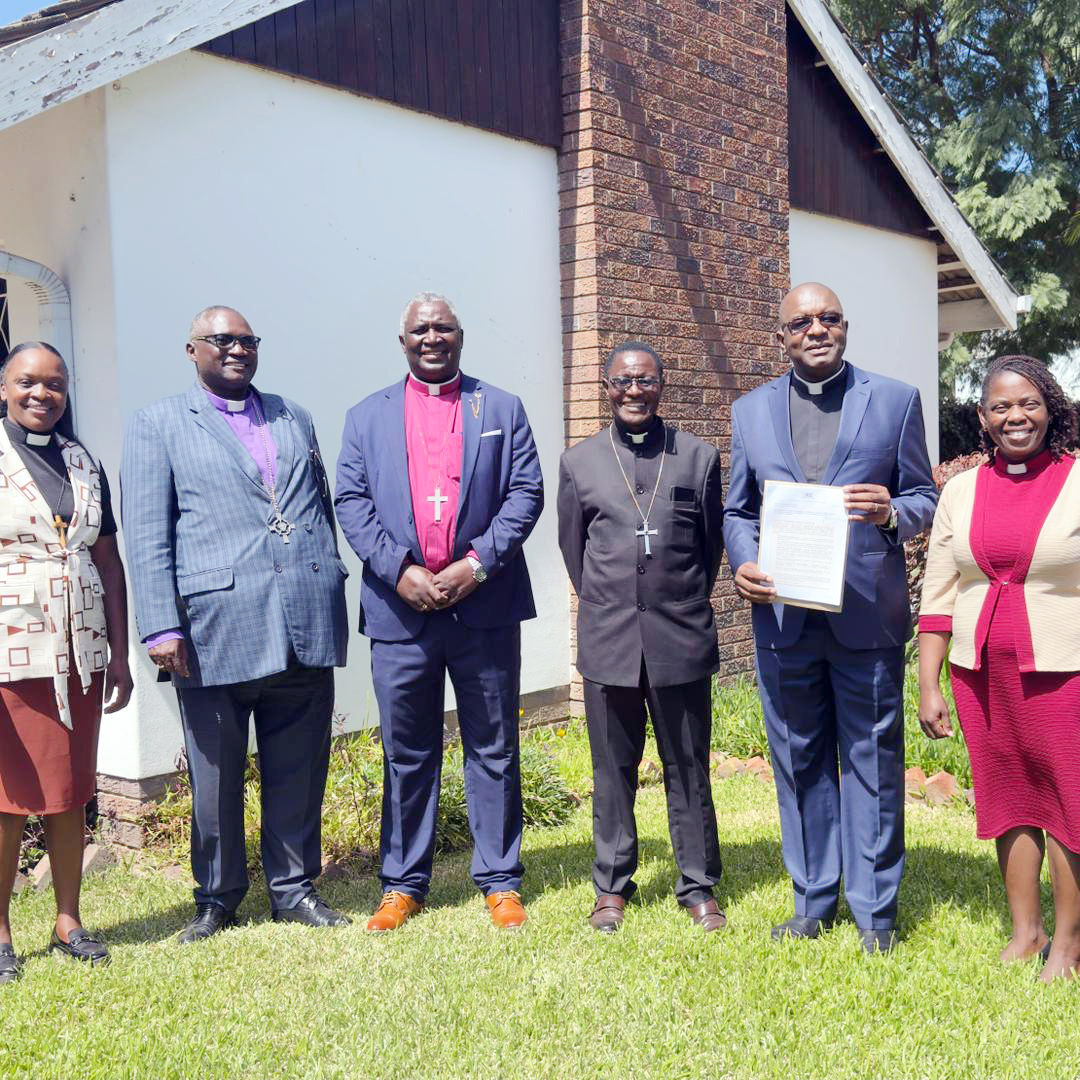
HARARE – The Zimbabwe Council of Churches (ZCC) has formally opposed the Constitution of Zimbabwe Amendment (No.3) Bill, submitting a 19-page statement of to parliament on Monday in which it described the bill as a “significant, cumulative, and fundamentally anti-democratic restructuring” of Zimbabwe’s constitutional order.
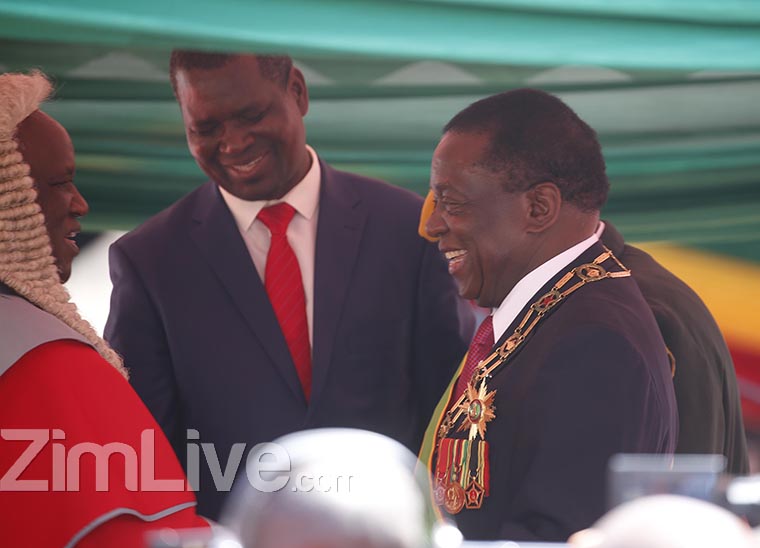
The ZCC, which represents 32 member denominations with a combined reach of at least three million citizens, said the bill causes potential harm to the nation and the legacy of President Emmerson Mnangagwa, and called on parliament to withdraw or substantially revise it.
The bill, tabled before parliament in February, proposes the most extensive changes to the country’s constitution only adopted in 2013.
Among its most contentious provisions is a proposal to extend presidential and parliamentary terms from five to seven years, with a clause explicitly stating the extension would apply to current incumbents, effectively extending Mnangagwa’s term to 2030 without an election.
The bill also proposes replacing direct presidential elections with a parliamentary vote, under which the president would be elected by members of parliament in a joint sitting of the Senate and the National Assembly rather than by the general electorate.
Other provisions include granting the president power to appoint 10 additional senators, removing the vice president’s automatic right to succeed the president by repealing the relevant provision in Section 100, transferring voter registration duties from the Zimbabwe Electoral Commission to the Registrar-General, removing the requirement that the Prosecutor-General be appointed on the advice of the Judicial Service Commission, abolishing the Zimbabwe Gender Commission, repealing the National Peace and Reconciliation Commission, and amending the functions of the Zimbabwe Defence Forces by removing the explicit obligation to “uphold the constitution.”
Acting in what it described as its role as a watchman, a biblical mandate compelling the church to speak when it sees the nation walking toward harm, the ZCC said the bill “concentrates executive power, opens the door to corruption and the massive, unchecked accumulation of wealth by those in power” and “undermines national development.”
The ZCC directly challenged the bill’s stated objectives, saying its own assessment found the legislation undermined the very goals it claimed to advance.
On the question of stability, the church body said the bill “introduces greater toxicity into leadership transitions rather than managing them,” adding that “stability built on constitutional manipulation is not stability; it is deferred crisis.”
On claims by the bill’s proponents that extending the president’s term will spur development, the ZCC invoked the record of former President Robert Mugabe, saying: “Zimbabwe did not attain significant national development despite the former President Robert Mugabe staying in power for nearly 37 years.”
The church body was particularly forceful on the term extension, noting that Mnangagwa had “publicly and unambiguously committed to being a constitutionalist and to leaving office after serving two full five-year terms.”
It said proceeding with an amendment extending his current term without an election was a breach of that commitment, reiterating its position that “leadership is stewardship, not ownership.”
On the proposed shift to parliamentary election of the president, the ZCC said the change “redefines, rather than refines, the source of executive legitimacy,” arguing that a president elected by politicians was “accountable to politicians, not to the people.”
It also raised concern about the 10 additional presidential Senate appointees, warning they could give the ruling party a two-thirds majority in the Senate sufficient to pass further constitutional amendments without any meaningful opposition participation, describing the provision as “an instrument for constitutional capture dressed as an enhancement of legislative capacity.”
The ZCC also raised alarm about the proposed transfer of voter registration to the Registrar-General, who it noted was appointed by and accountable to the executive.
“Returning voters’ roll management to the Registrar-General is not modernisation,” it said. “It is a deliberate reversal of hard-won electoral integrity safeguards.”
On the proposal to abolish the National Peace and Reconciliation Commission, the ZCC warned that doing so would eliminate a mechanism for addressing historical injustices including Gukurahundi, past electoral violence and land disputes without replacement, and would send “a severely negative international signal regarding Zimbabwe’s commitment to transitional justice.”
The church body also raised concerns about the conduct of parliamentary hearings on the bill, saying people had been intimidated and those opposed to the bill had not been given a free chance to express their views.
The churches noted the arrest of persons conducting public awareness about the bill, saying this illustrated the risk of a politically-controlled Prosecutor-General’s office and that “this is happening before Clause 20 even takes effect.”
“On moral, ethical, and theological grounds, the church cannot support an amendment that compromises public trust, weakens democratic accountability, and diverges from God’s will for just and compassionate leadership,” the ZCC said.
“It is morally indefensible before God for leaders to silence the people’s voices in this manner.”
The ZCC made three formal recommendations to parliament: that the bill be withdrawn or substantially revised; that an independent constitution amendment commission be established to conduct consultations “free from the conflict of interest that arises when the institutions advancing the bill are its direct beneficiaries”; and that should the bill proceed, a national referendum be held, as it “fundamentally alters the 2013 constitution and provides for term extensions benefiting current incumbents” – requiring “direct citizen consent, not parliamentary approval by those who benefit from it.”
The bill is set to be debated in the Zanu PF-dominated parliament next month at the end of 90 days of public consultations before being put to a vote.