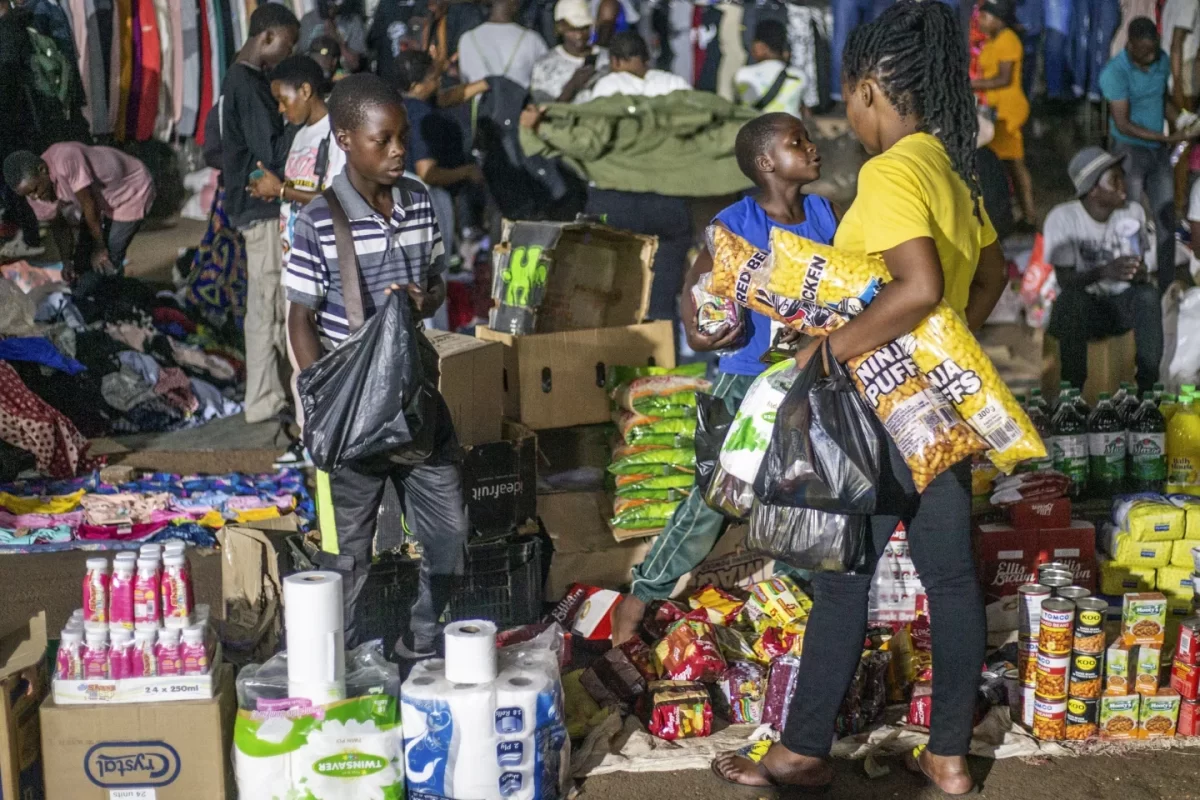
HARARE — Thousands of Zimbabweans who have turned to street vending to survive face losing their only source of income after the government issued a “stern and final warning” to informal traders operating outside designated markets in Harare and other urban centres.
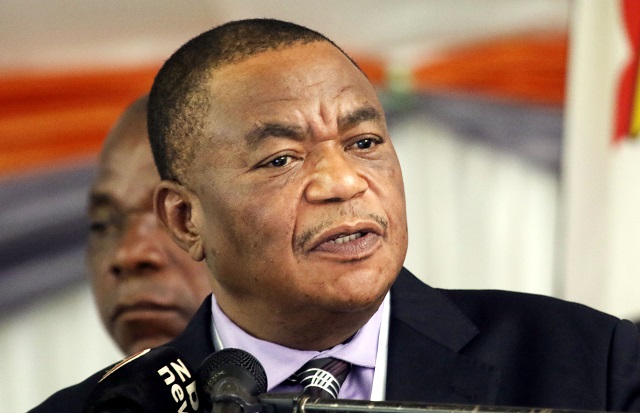
Local government minister Daniel Garwe gave vendors trading at undesignated spots in the capital and greater Harare province until Wednesday, September 9, to vacate their sites voluntarily or be swept up in what the ministry described as a “comprehensive, zero-tolerance clean-up operation” that will disband illegal vending structures, stalls and sites and deploy municipal police to keep cleared areas from being re-occupied.
The operation, Garwe said in a statement, will begin in Harare before being rolled out “systematically” to other cities, towns and urban settlements nationwide.
Garwe said the operation was in line with the government’s national development strategy which set targets for a cleaner, more orderly urban economy.
“Whilst the government acknowledges the existence of informal trading as a recognised avenue of livelihood, this, however, should be within the bounds of municipal by-laws and at legally designated marketplaces,” Garwe said, describing the current state of street trading as “disorderliness” that has “become a threat to the health and security of our nation.”
For many of those the directive targets, though, vending is less a matter of defying the law than of having nowhere else to turn.
Zimbabwe’s economy remains one of the most informalised in the world: recent estimates put between 80 and 90 percent of the working population in informal activity, with the sector contributing roughly 40 percent of GDP, according to research cited by Harvard University’s Center for African Studies. A separate ILO-UNESCO assessment found the informal sector employs more than 80 percent of Zimbabweans, while ZimStat’s own labour force data has put informal employment above 86 percent of all those working.
That scale reflects decades of de-industrialisation, company closures and a shrinking formal job market that has left millions with no route into salaried employment. The official unemployment rate, as measured by the International Labour Organisation, sits in the single digits — around 8.6 percent as of the most recent data — but that narrower measure counts only those actively searching for formal work, and sits uneasily alongside the far larger numbers of Zimbabweans who have given up looking and instead buy and sell on the pavements, verges and undesignated corners the ministry now wants cleared.
Vending, hawking and cross-border trading have for years functioned as Zimbabwe’s default safety net in the absence of formal jobs or a robust social welfare system, absorbing retrenched workers, school leavers who cannot find employment and rural migrants pushed out by droughts and agricultural decline.
Rights groups and vendor associations have repeatedly warned, during previous rounds of municipal clean-up operations dating back to the 2005 Operation Murambatsvina, that such exercises destroy stock and livelihoods faster than government has managed to build the “designated markets” it directs traders toward.
The ministry’s statement urges traders to use the window before September 9 to relocate voluntarily to lawful vending markets, and instructs local authorities to “facilitate the immediate registration and orderly placement of compliant traders into designated structures.”
It does not specify how many such structures currently exist or have capacity to absorb displaced vendors ahead of the deadline.
The government has framed the operation as necessary to restore sanitation, unblock pathways and ease congestion in the capital, and says it remains committed to a “sustainable, orderly, clean and safe macroeconomic environment.”