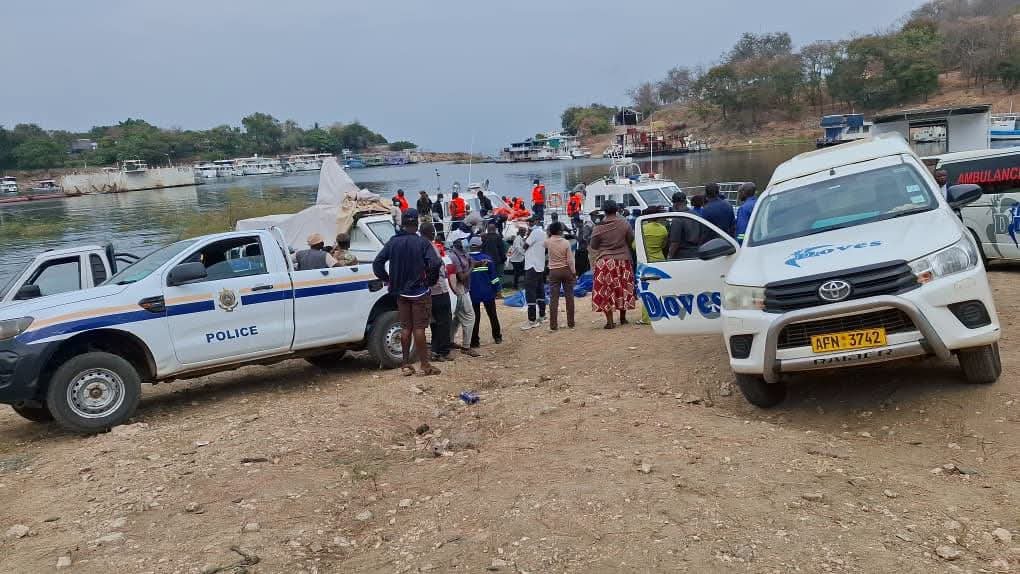
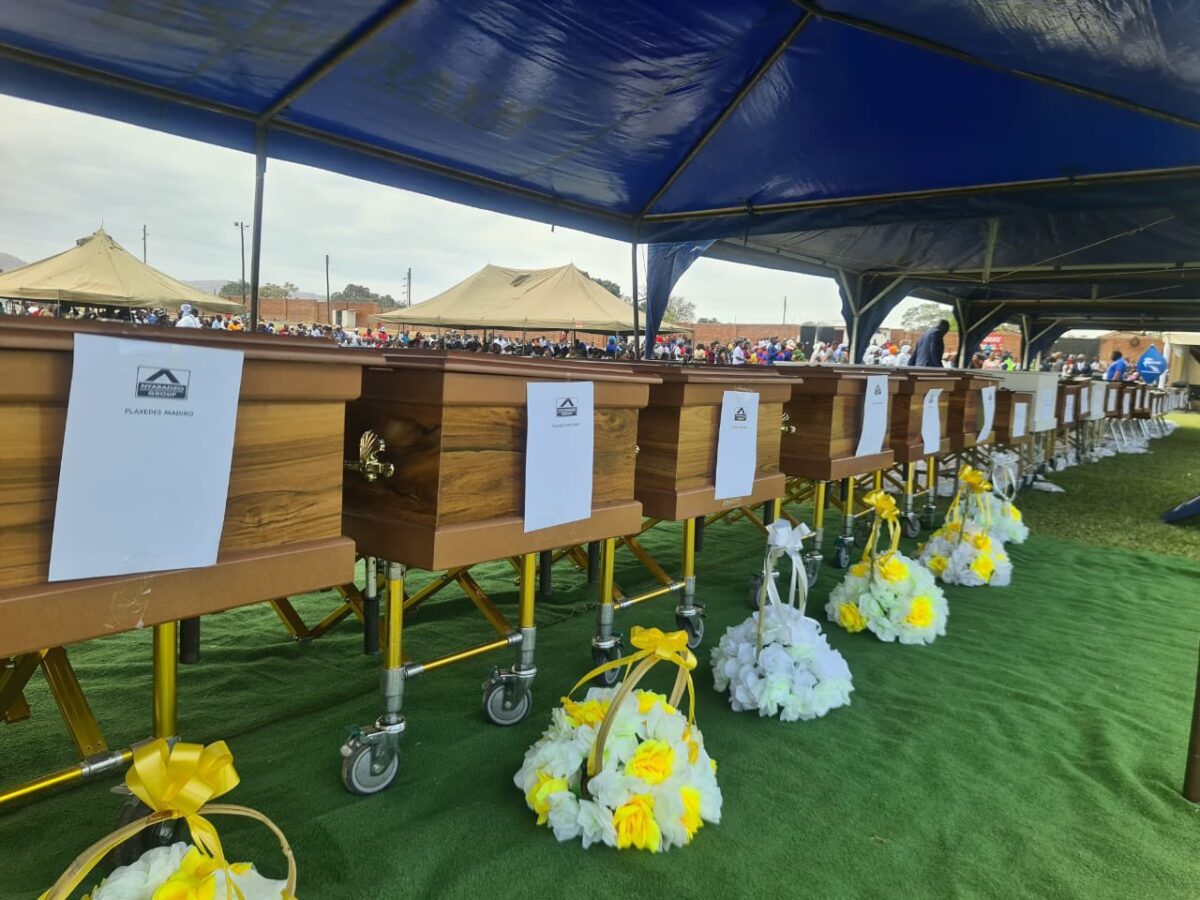
HARARE – A mass funeral service was held on Thursday for victims of the Lake Kariba boat disaster as two more bodies were recovered from the sunken passenger ferry, bringing the death toll to 46.
The 67 survivors of the tragedy sat under a tent as a procession of vehicles from a funeral parlour delivered the victims’ bodies in state-provided coffins.
Many of the survivors said they had either lost relatives or still had family members unaccounted for, as authorities admitted they still do not know exactly how many people were aboard the doomed vessel, popularly known as Mbuya Nehanda.
Police initially said the ferry was carrying 90 passengers and five crew members before revising the figures to 114 paying passengers and five crew members. Children were not included in the official count because they did not require tickets.
But Earnmore Chambati, a security officer who was aboard the vessel and the only surviving member of the five-man crew, insists there were 153 people on board.
He said his responsibilities included checking receipts and verifying that passengers had paid for the crossing.
“The people I counted, including children, were 153,” Chambati told the state broadcaster, ZBC.
The vessel, which links Kariba town with rural communities across Lake Kariba, was designed to carry 90 passengers, suggesting it was severely overloaded when it capsized in heavy winds and rough waters.
Thousands of mourners gathered at Nyamhunga Stadium in Kariba, where government officials led by Local Government Minister Daniel Garwe offered condolences and pledged to improve transport infrastructure in the area.
The ferry was owned by the Rural Infrastructure Development Agency (RIDA), a government agency under the Office of the President and Cabinet responsible for developing and maintaining roads, water supplies and other rural infrastructure. RIDA was previously known as the District Development Fund (DDF).
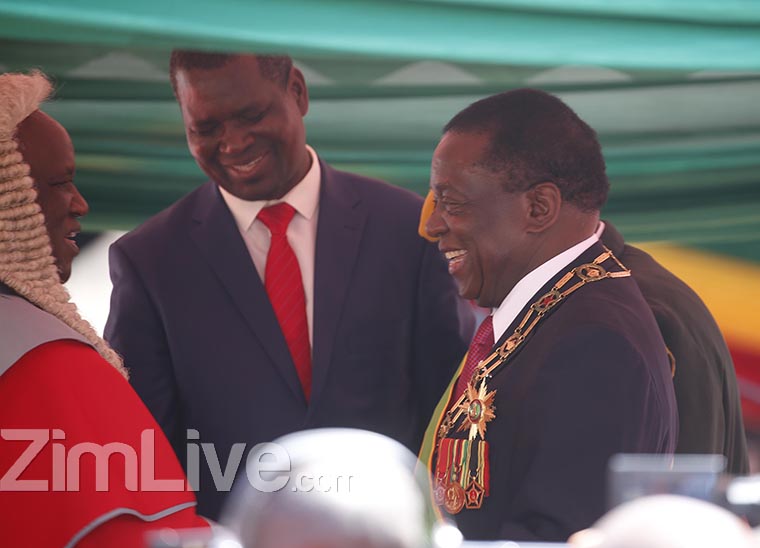
President Emmerson Mnangagwa on Tuesday acknowledged what he described as Zimbabwe’s “maritime deficiencies” following the disaster.
Garwe told mourners that Mnangagwa, “in line with the mantra of leaving no one and no place behind”, had directed authorities to secure another vessel to ensure that transport services continued.
According to Garwe, Mnangagwa also instructed Transport Minister Felix Mhona to mobilise resources for the rehabilitation and upgrading of the Karoi-Binga Road to improve access to Chalala, Mola, Siakobvu and surrounding communities that rely heavily on lake transport.
The government has long faced criticism over its failure to invest in road infrastructure around Kariba, forcing many residents to depend on the ferry for transport.