
HARARE – Zimbabwean author Sue Nyathi says the country has the talent and locations to become a competitive destination for international film productions, but must reduce red tape and create an environment that allows its creative industries to grow.
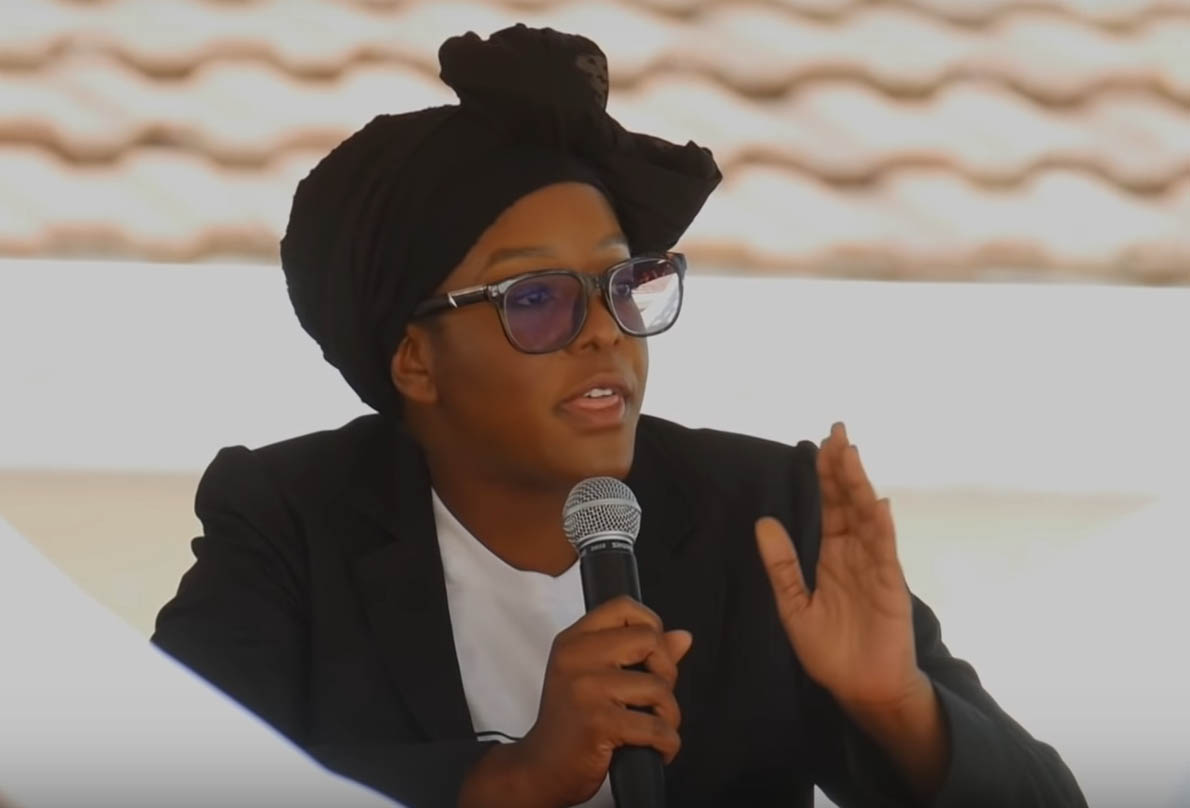
Nyathi, whose novel The Polygamist has found a new global audience following its adaptation for television, was speaking during a fireside conversation hosted by the U.S. Embassy in Harare on Friday.
“Zimbabwe is a beautiful country, and we have competitive locations,” Nyathi said. “But I think we need to market ourselves better as a destination. And I think that the red tape around productions needs to be reduced.”
She said Cape Town had demonstrated how a destination could attract international film productions.
“If you are going to market yourself as a competitive destination, I mean, right now, Cape Town is attracting all the international producers,” Nyathi said. “Films are being made there and there’s no reason why it can’t be made here.”
Nyathi said Zimbabwe needed to make it easier for filmmakers to operate in the country, including doing away with what she described as the rigorous processes involved in securing permission to shoot.
“If you want to compete with that, open the doors. Let people come in and shoot. You have the talent for that,” she said.
The discussion came as The Polygamist, first published in 2012, enjoys renewed attention following its screen adaptation.
In opening remarks, U.S. Embassy Chargé d’Affaires Phil Nervig said the adaptation had become one of Netflix’s most-watched African series.
“Millions of viewers around the world have fallen in love with a story born in Bulawayo,” Nervig said.
He said Nyathi’s success demonstrated the possibilities created when Zimbabwean stories gain access to international platforms.
“Her success shows how American innovation and Zimbabwean creativity can combine to expand cultural understanding, drive economic opportunity, and bring our people closer together,” Nervig said.
Nyathi’s journey as a writer began long before The Polygamist.
Born and raised in Bulawayo, she attended school in the city before studying at the National University of Science and Technology.
She said she began writing when she was 13, producing a novella that she circulated among classmates. With only a single copy available, students passed it among themselves before returning it to her. The experience encouraged her to continue telling stories.
Nyathi later began a career in financial services and worked in Harare, where she joked that it was where she first encountered “the Jonasis of this world.” She eventually moved to Johannesburg, where she became exposed to a more active literary community, attending festivals and meeting other writers while working in consulting.
She completed the first draft of The Polygamist around 2010.
Finding a publisher, however, proved difficult. Nyathi said publishers initially showed little interest in the manuscript, questioning whether there was a market for the book, which eventually led her to consider self-publishing.
More than a decade after its publication, Nyathi said The Polygamist continued to sell.
“No month has gone past without selling The Polygamist,” she said. “People are still buying it.”
The screen adaptation has introduced the story to another audience, opening opportunities to give the book another life in new markets.
Her other works include the novels The Gold Diggers, A Family Affair, and An Angel’s Demise, while she has also edited and contributed to collections.
Nyathi said her books remain in publication. “It’s just re-launching them in different markets, in different countries,” she said.
She encouraged writers to think beyond simply selling physical books and consider other ways their work could create opportunities.
“It might not necessarily be film, but even speaking engagements, or being a motivational speaker,” Nyathi said. She added that writers could also explore corporate training, audiobooks, and adapting their work into different media formats. “So, it’s just thinking beyond just, ‘I’m going to sell this object,’ and developing your book into different media formats.”
Nyathi also urged writers to understand the commercial side of their craft.
“I know people like to romanticize writing and art, you know, the hungry artist,” she said.
Her background in finance, she said, helped her understand sales and approach writing as a business, including during the period when she was self-publishing.
“Another thing is to treat yourself like a business. I had to look at the numbers, the logistics,” Nyathi said.
The conversation also turned to whether Zimbabwe was doing enough to retain its creative talent.
Asked how the country could avoid losing more writers and other creatives to opportunities elsewhere, Nyathi said conditions at home mattered.
“Yeah, you need to then create an enabling environment,” she said.
Nyathi also addressed the growing use of artificial intelligence in writing and publishing, noting that publishers were looking for unique work and referring to writers who had lost major deals after using AI to write books.
“So, I’m not worried about AI,” Nyathi said. “I think there’s still room for us, as human writers.”
Nyathi said digital platforms had created opportunities for aspiring writers to put their work before audiences, while book clubs had also played a critical role in building her readership.
“I owe a lot of my popularity to book clubs,” Nyathi said. “Word-of-mouth marketing is important for a writer.”
The discussion also explored the portrayal of women in The Polygamist and the different standards society applies to choices made by men and women.
“We still live in a patriarchy. We still judge women,” Nyathi said.
Addressing an audience question about controversial decisions made by female characters—such as a mother leaving her children behind—Nyathi highlighted the harsh reaction such choices generate.
“People are up in arms, like, how does she leave her children? But men leave their children,” Nyathi said. “Every day. They abandon their children. And nobody complains.”
She said such reactions showed society continued to judge women far more harshly for decisions that attract little criticism when made by men.
“The system allows men to not suffer the same consequence,” Nyathi said. “So, you still see that there are two standards when it comes to society, and women tend to be judged more harshly for making choices that men make.”
Despite the new audiences and formats through which The Polygamist is being consumed, Nyathi was less certain about one possibility—a sequel.
“The first question about a sequel, I don’t know,” she said. “My book ends with the main character dying, so I don’t know if they want me to write a sequel.”