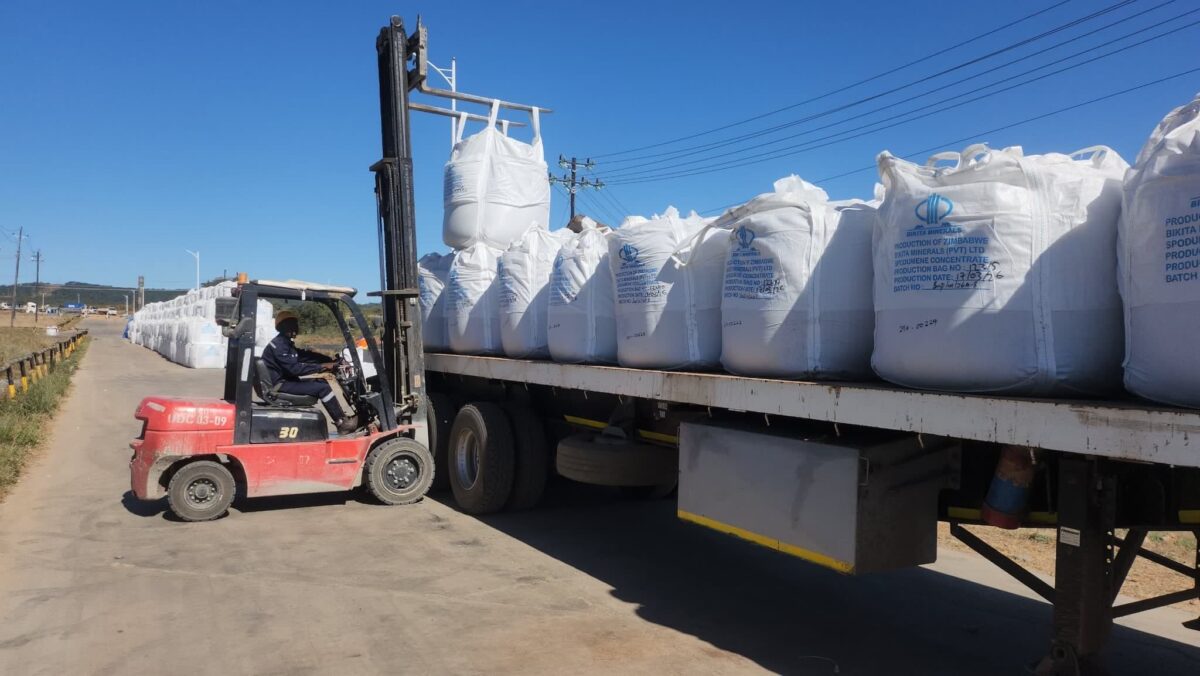
HARARE – Dorowa Minerals paid about US$1.4 million for specialised equipment that was never delivered, lawmakers heard Thursday, as parliament raised broader concerns over procurement and corporate governance in Zimbabwe’s state-controlled fertiliser industry.
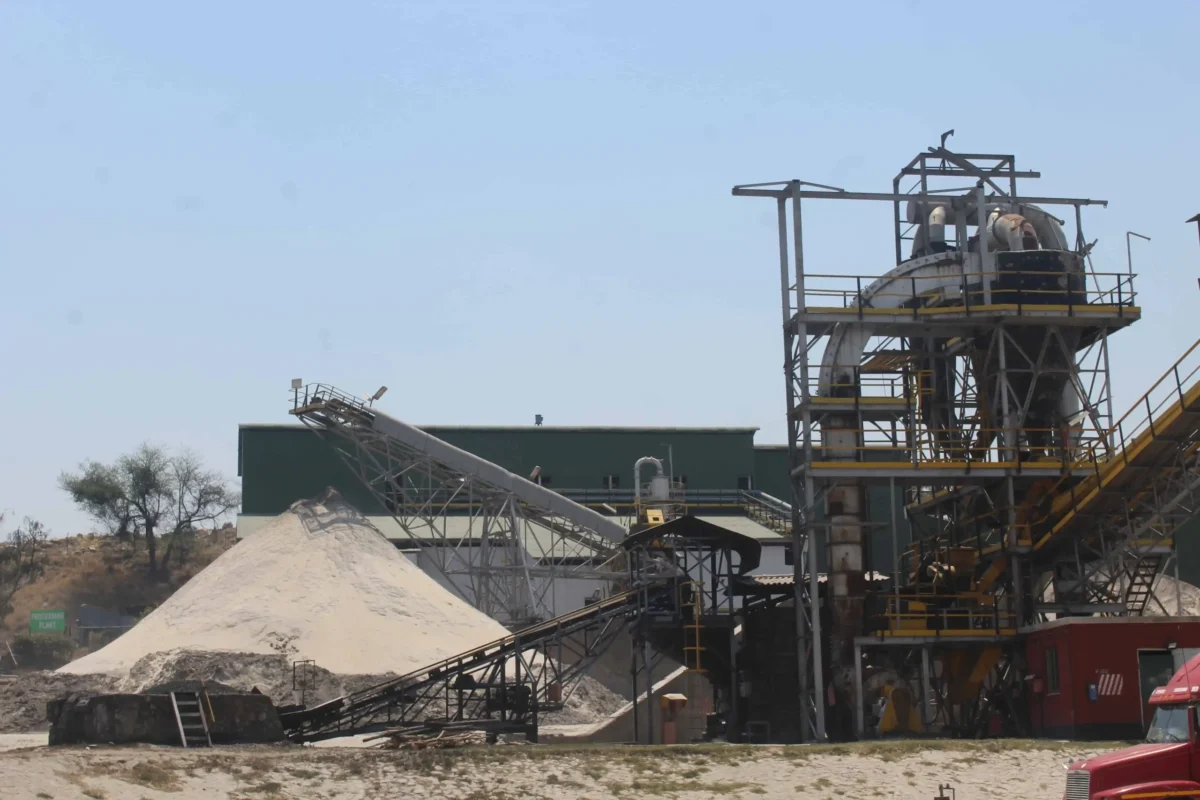
During debate on a Portfolio Committee on Industry and Commerce report on the fertiliser value chain, lawmakers said Dorowa – the government-owned producer of phosphate concentrate used in fertiliser production – bought specialised pumps from South Africa for US$1.4 million but the equipment had not been delivered because of what management described as contractual disputes.
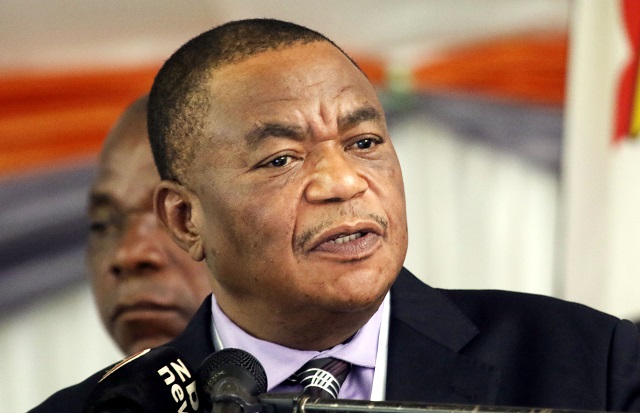
“At Dorowa, about US$1.4 million was paid for equipment which was never delivered,” Zanu PF Hurungwe East legislator Chenjerai Kangausaru told the National Assembly.
He said the government needed to strengthen accountability around rehabilitation of state-owned fertiliser companies.
“The government must pay local fertiliser suppliers on time while all major rehabilitation projects should have strong controls, independent audits and clear responsibility for delays or losses,” Kangausaru said.
The committee heard that Dorowa, which supplies phosphate used in fertiliser production, operated at only about 20 percent capacity between 2016 and 2024 before stopping production in 2025. ZimPhos was reported to be operating at about 5 percent capacity.
Mbizo legislator Corban Madzivanyika gave parliament a more detailed account of the Dorowa transaction, saying the company bought specialised pumps from South Africa but lawmakers were not given a clear explanation for why they had not been delivered.
“In Dorowa, they came and purchased what is called specialised plants or pumps from South Africa for US$1.4 million. We were told that the pumps were not delivered. What is the reason? We were told that there were some contractual disputes but we were not told what the disputes were,” he said.
“We were just told that there were contractual disputes and the pumps amounting to US$1.4 million have not yet been delivered.”
Madzivanyika alleged links between suppliers and company officials, saying parliament had uncovered deeper governance concerns during its investigation.
“If you look at the suppliers, they are the same people who came out of the scramble. They are related to management.
“They are related to the directors. It is so worrying because Dorowa went on again to buy new pumps. So, the US$1.4 million just went down the drain like that. It disappeared.”
The Hansard does not record a response from Dorowa, Chemplex or Mutapa Investment Fund to the allegations during Thursday’s debate.
Lawmakers also questioned another Dorowa procurement involving construction of a magnetite storage shed.
Madzivanyika said Dorowa contracted KowaZim Private Limited to build the structure for US$110,000 and paid the amount in full.
“What happened? KowaZim tried to construct this magnetite shed and it collapsed three times. What kind of decadence! It means you employed someone who does not have an idea of constructing a magnetite shed. Three times is not a joke,” he said.
He said the company was subsequently given another opportunity and paid an additional US$55,000.
“They paid again. How much did they pay? For your information they paid another USD55 000 to KowaZim Investments. It did not end there. It failed again to construct that magnetite shed.”
Madzivanyika said another contract worth US$71,000 was later proposed before senior Industrial Development Corporation of Zimbabwe officials intervened.
“My question is, how can a normal director award a tender to a company which was unable to construct it three times? They draw another contract again. That level of corruption, I think it has taken us so far. I think as a Government, we need to raise our voice on this very important issue.”
Parliament also heard concerns about procurement at ZimPhos.
Madzivanyika said the company purchased a granulator for US$1.7 million and required another US$1.3 million for installation.
He contrasted that with private fertiliser producer Nutrimaster, which he said bought and installed a similar granulator for US$1.2 million.
“Zimphos bought a granulator for US$1.7 million and they say they want a further US$1.3 million to install that granulator at Zimphos,” Madzivanyika said.
“But when we went to Nutrimaster, Madam Speaker, Nutrimaster bought its own granulator and installation at US$1.2 million but at Zimphos, Zimphos bought it at US$1.7 million. It requires an additional US$1.3 million for installation. What a kind of absentee. It means there is an absolute fraud.”
He also alleged serious governance problems across government-controlled companies in the fertiliser value chain, saying some directors sat on multiple boards.
“The biggest problem that we have is not the resources Madam Speaker but the corporate governance malpractice and outright corruption,” Madzivanyika said.
Zanu PF Chief Whip Pupurai Togarepi backed calls for action, saying Parliament should recommend that boards overseeing parts of the fertiliser value chain be dissolved.
“What has touched me is the corporate governance structure where same people are found everywhere in the value chain. How objective, how efficient can they be if they know that they will be the people who will pocket the money?” Togarepi said.
“I think all these boards, as Parliament, we must recommend that they be dissolved.”
The concerns come as Zimbabwe continues to spend heavily on fertiliser imports despite having substantial domestic production capacity.
Parliament was told Zimbabwe spent about US$2.11 billion on fertiliser imports between 2018 and 2024 despite installed production capacity of about 2 million tonnes a year against national demand of about 780,000 tonnes.
“The message from this report is clear, Zimbabwe has the resources and the factories, but we are failing to turn it into production,” Kangausaru said.