
HARARE – Four women, including the second wife of President Emmerson Mnangagwa’s son Collins, were hurried through guilty pleas and fined in two separate courts in proceedings lawyers have described as “festivals of irregularity”, raising questions about how their drug cases were handled.
Kelsea Tafirenyika, 22, her mother Amina Jassinta Jessub Arab, 47, sister Dyonne Tanaka Tafirenyika, 28, and aunt Noreen Jessub, 51, were all convicted on drug possession charges and fined amounts ranging from US$100 to US$300.
A ZimLive analysis of the cases has uncovered a series of questionable procedural decisions involving magistrates, prosecutors and a lawyer representing the women, which legal experts say could provide grounds for the convictions to be overturned and fresh trials ordered.
The concerns centre on three major issues: the reopening of a case after it had been formally postponed; the introduction of new charges without following the prescribed arrest and charge procedures; and guilty pleas entered by a lawyer without the accused personally confirming their admission of guilt to the magistrate.
Sources say the four women left Zimbabwe for South Africa shortly after paying their fines, with Dubai believed to have been their ultimate destination.
Kelsea’s case in Harare provides the clearest illustration of the alleged irregularities.
She was initially arrested on a charge of unlawful dealing in dangerous drugs under section 156(1)(a) of the Criminal Law (Codification and Reform) Act [Chapter 9:23]. During a police raid on her Greystone Park home on August 4, she had been found in possession of an assortment of drugs including morphine, pethidine and cannabis.
On October 7, she appeared before Harare magistrate Winfilda Tiyatara, represented by lawyers Malvern Mapako and Admire Rubaya.
The National Prosecuting Authority (NPA), represented by Mandirasa Chigumira, told the court investigations were not yet complete and sought a postponement to October 27. Mapako and Rubaya consented, and the magistrate granted the application.
That order effectively brought the proceedings to a close until the next remand date, unless the court was properly approached to revisit it.
A senior lawyer who read the court record but spoke on condition of anonymity as his comments included criticism of judicial officers, said the principle of functus officio prevented a magistrate who had issued a postponement order from simply reopening the matter before the set remand date.
“An order for postponement is simply that, an order of the court. It carries particular terms which cannot be altered without an application. When an order is issued, the magistrate becomes functus officio, which is to say he or she cannot reopen the matter prior to the next remand date, except if an accused is seeking bail, or some extraordinarily exceptional circumstance,” the lawyer said.
Yet, barely 24 hours later, Kelsea was back in court.
The hearing began after 4PM – when courts are ordinarily closing – on October 8, before a different magistrate, Ignatio Kudakwashe Mhene. Chigumira was again prosecuting, despite having requested and obtained the postponement to October 27 just the previous day.
Kelsea was now represented by Advocate Silvester Hashiti. Advocates do not deal directly with litigants but work on instructions by lawyers, but the court record makes no reference to an instructing attorney accompanying Hashiti.
Rubaya, whose firm Rubaya and Chatambudza Legal Practitioners was on record, confirmed he had received no notification from the NPA about the hearing and was not present.
The proceedings also saw Kelsea facing different and considerably lesser charges than the unlawful dealing allegation for which she had originally been arrested.
The new charges were unauthorised possession of prescription preparatory medicine, under the Medicines and Allied Substances Control Act, and unlawful possession of dangerous drugs.
Lawyers questioned how the new charges came to be introduced without Kelsea being formally processed again.
They told ZimLive that because the prescription medicine charge arose under a separate law, police should have summoned or arrested her on the new allegation, recorded a fresh warned and cautioned statement and then taken her through the ordinary process of appearing in court.
There is no indication in the record that this happened, raising questions about the circumstances in which the new charges were prepared and brought before the court.
But the most consequential irregularity, lawyers say, came when the guilty pleas were entered.
Hashiti tendered pleas of “guilty” on Kelsea’s behalf to both counts, resulting in fines of US$300 on the first and US$100 on the second.
Our legal experts who examined the record say the procedure did not comply with section 271(2)(b) of the Criminal Procedure and Evidence Act [Chapter 9:07], which prescribes how a court must handle a plea of guilty.
The law requires the magistrate to establish the facts supporting the charge by asking the prosecutor to outline the alleged acts or omissions constituting the offence.
The court must then establish from the accused personally whether she understands the charge and its essential elements, and whether her plea amounts to an admission of those elements and the facts alleged.
“Okay, do you want allegations read or we can skip?,” Mhene asked.
“We can waive the reading of the allegations, we also waive reading of the state outline. Those are common cause and I have explained the full contents of both to my clients and we confirm that to be correct,” Hashiti responded.
Mhene asked: “And you said they plead guilty to all?”
“Yes, for both counts,” came the reply from Hashiti.
Mhene concluded: “Okay, since you have explained everything and the essential elements, I have found they are guilty as pleaded to both counts.”
A lawyer who studied the proceedings said the magistrate had failed in his duty to establish whether Kelsea herself understood and admitted the charges.
“Magistrate Mhene acted in a grossly irregular manner in failing to cause the prosecutor Chigumira to read the charges directly to Kelsea and obtaining her personal response towards the charges to which she was supposed to personally answer through her own mouth, not through Hashiti, resulting in the magistrate proceeding on an invalid plea of guilty tendered by Hashiti and not by Kelsea personally as is required at law,” the lawyer said.
The proceedings also produced an extraordinary exchange after the prosecutor and defence counsel appeared to agree on the fines.
The record captures Mhene remarking: “You two… you are actually colluding I see.”
Hashiti declined to comment on his role in the proceedings, while the NPA had not responded to written questions despite promising to do so.
The same pattern of expedited proceedings emerged in Bulawayo, where Kelsea’s mother, sister and aunt were facing drug charges.
The three were arrested at a Bulawayo lodge on August 18, 2026, after allegedly being found in possession of cocaine and crystal methamphetamine.
They initially faced charges of unlawful dealing in dangerous drugs and appeared before magistrate Mark Dzira, who on October 16 set November 5 and 6 for their trial.
But on November 2, just three days before the scheduled trial, the women made a surprise appearance before the same magistrate, with Acumen Khupe prosecuting.
Their charges had been downgraded from unlawful dealing in dangerous drugs to the lesser offence of possession of dangerous drugs.
As in Kelsea’s case, the proceedings ended with guilty pleas and fines, without the trial dates ever being reached.
The court record does not capture what the women personally said when their pleas were taken. Instead, it records Hashiti stating: “The plea is in accordance with my instructions. We hereby waive the reading of facts.”
Once again, the record does not identify the instructing lawyer behind Hashiti’s appearance.
Amina Arab was fined US$200, Noreen Jessub US$250, while Dyonne Tafirenyika was ordered to pay US$300.
Lawyers say the apparent negotiations between the prosecution and defence over the reduced charges and fines did not, in themselves, remove the need to follow proper court procedure.
If the women had reached an agreement with the NPA to plead guilty to lesser charges, the court should have been formally informed that the matters had already been postponed for trial, that the prosecution intended to amend the charges and that the parties had reached an agreement to resolve them through guilty pleas.
The court would still have been required to satisfy itself that the accused understood the amended charges and personally admitted the essential elements of the offences.
“An examination of these proceedings in Harare and Bulawayo leaves one with a feeling that this was a festival of irregularity. I doubt we have heard the last of it,” one lawyer said.
The charge of dealing in dangerous drugs for Kelsea resulted in her second arrest accused of laundering proceeds of drugs to acquire a property portfolio of $9.3 million. Once the NPA reduced the charge to mere possession and an infraction of the Medicines and Allied Substances Control Act, the central plank for the money laundering charge fell away.
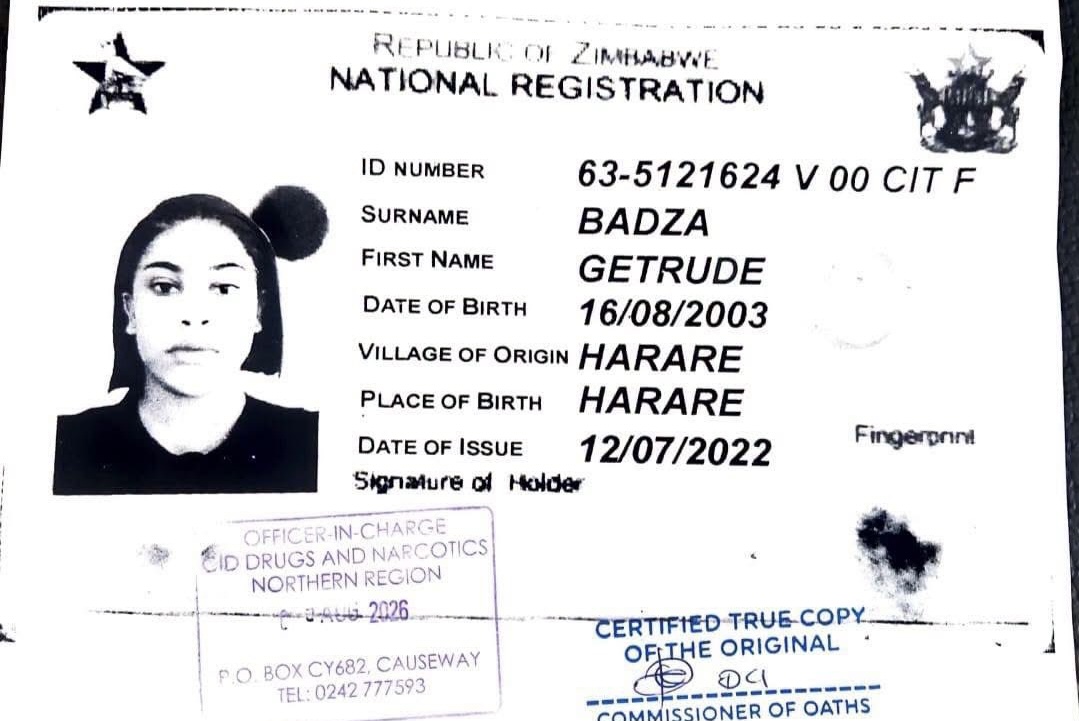
Kelsea had also been charged with identity fraud after she was found with an identity card bearing the name Getrude Badza, bearing her photograph. The case also appears to have been mysteriously thrown away.
The central question now is whether the proceedings can stand if challenged.
Lawyers say the apparent failure to follow mandatory criminal trial procedure could provide grounds for the convictions and sentences to be set aside, potentially requiring the women to face fresh proceedings.
That prospect could prove complicated if, as this publication understands, all four have since left the country. The criminal convictions, however, may yet affect their movement.
Most first world countries, including the United Arab Emirates, will automatically deny visas for individuals convicted of high-risk offences such as drug crimes, violent crimes, fraud, and moral turpitude violations.