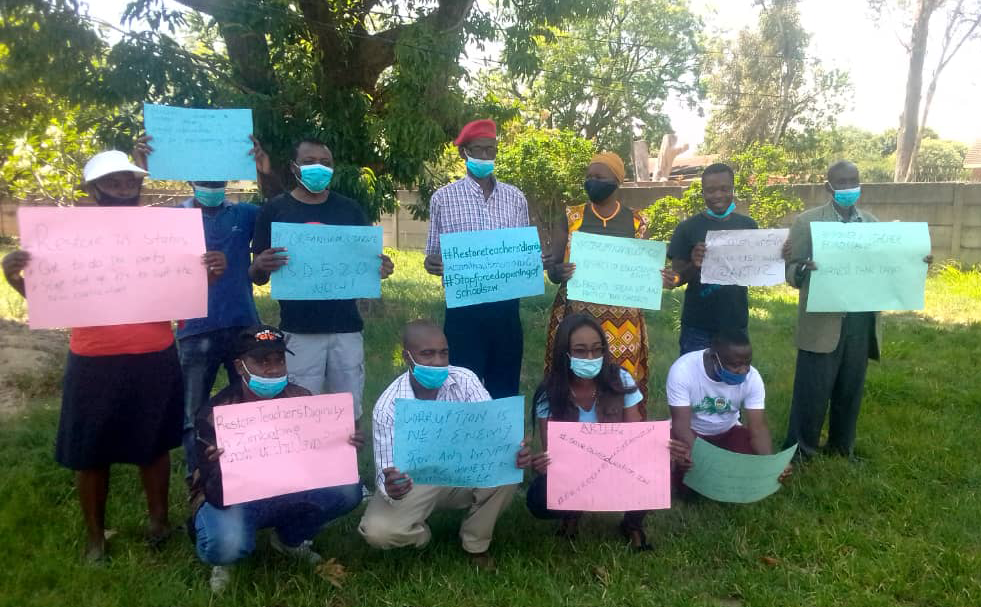
HARARE – The Amalgamated Rural Teachers’ Union of Zimbabwe (ARTUZ) staged a protest online Friday, calling on the government to address educational disparities that are negatively impacting marginalized communities.
The union wants unfettered access to quality education for all children, including rural dwellers.
“#SaveOurEducationZW is a class struggle against the deliberate exclusion of the sons and daughters of the working class from learning opportunities,” said ARTUZ president Obert Masaraure in a statement.
The demonstrated attracted individual teachers from across the country and sympathizers who posted their protest pictures under the hashtag on Twitter.
Masaraure said the gap between the rich and the poor had been laid bare by school closures due to the coronavirus pandemic, stranding pupils from disadvantaged families while their well-off counterparts were pressing ahead with their education through online learning.
Most rural schools have no computers, let alone internet connection or electricity, and families can barely afford data bundles for online lessons that have become the norm, thanks to the coronavirus lockdown.
“It is an indisputable fact that as I type right now the sons and daughters of the elites have submitted written assignments online after experiencing a whole day of receiving formal instruction from highly qualified teachers online,” Masaraure said.
“It is an irrefutable fact that some daughter of a peasant got impregnated today because for months she has been idle after the Covid-19 induced schools closures. It is common knowledge that Cambridge examinations were written with no hiccups.
“On the other hand, ZIMSEC exams were a messy affair being written by unprepared learners in an unsafe environment. The government on the other has cut funding on education and standards in public schools continue to fall,” he added.
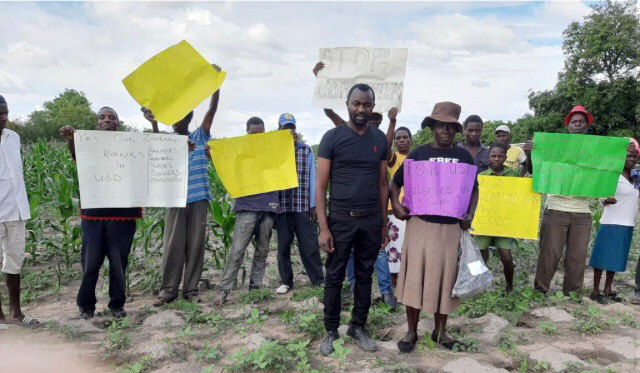
Social media has lately been awash with footage and photos of dilapidated schools and students learning under trees or makeshift shelters that are normally hazardous.
Masaraure said the #SaveOurEducationZW campaign was also advocating for more government funding for education and accountability in the expenditure of resources allocated in the era of Covid-19.
Teachers, especially those in the countryside, were also “highly demotivated and faced victimization by the “ruling Zanu PF party, being accused of pursuing a regime change agenda.”
One protester using the Twitter handle @munguri1 called on President Emmerson Mnangagwa to “prioritise public education. Rural learners, where you harvest votes, need e-learning. Above everything else pay teachers US$550 or equivalent.”
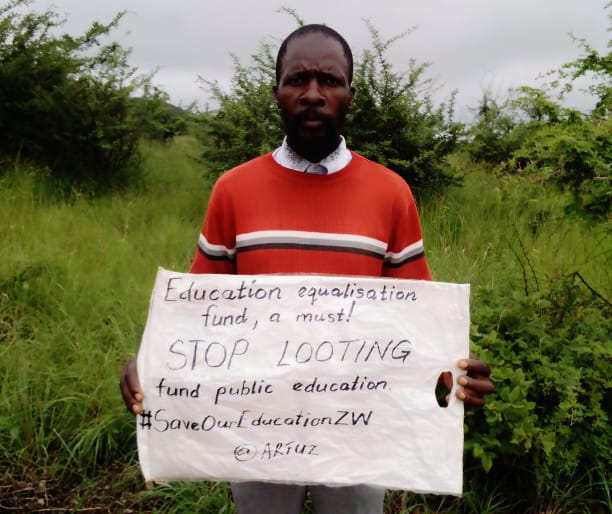
Feminist and rights campaigner Everjoice Win also joined in: “I stand with comrades and movements today, tomorrow, and until the right to education is upheld and promoted in Zimbabwe. For far too long, we as citizens have stood by while the one thing we were proud of was systematically destroyed.”
And human rights lawyer, Doug Coltart, an ARTUZ patron, paid tribute to the online protesters saying, “Well done to everyone who participated today in the #SaveOurEducationZw campaign. The issues facing our education sector were front and Centre and trending at No.1.”
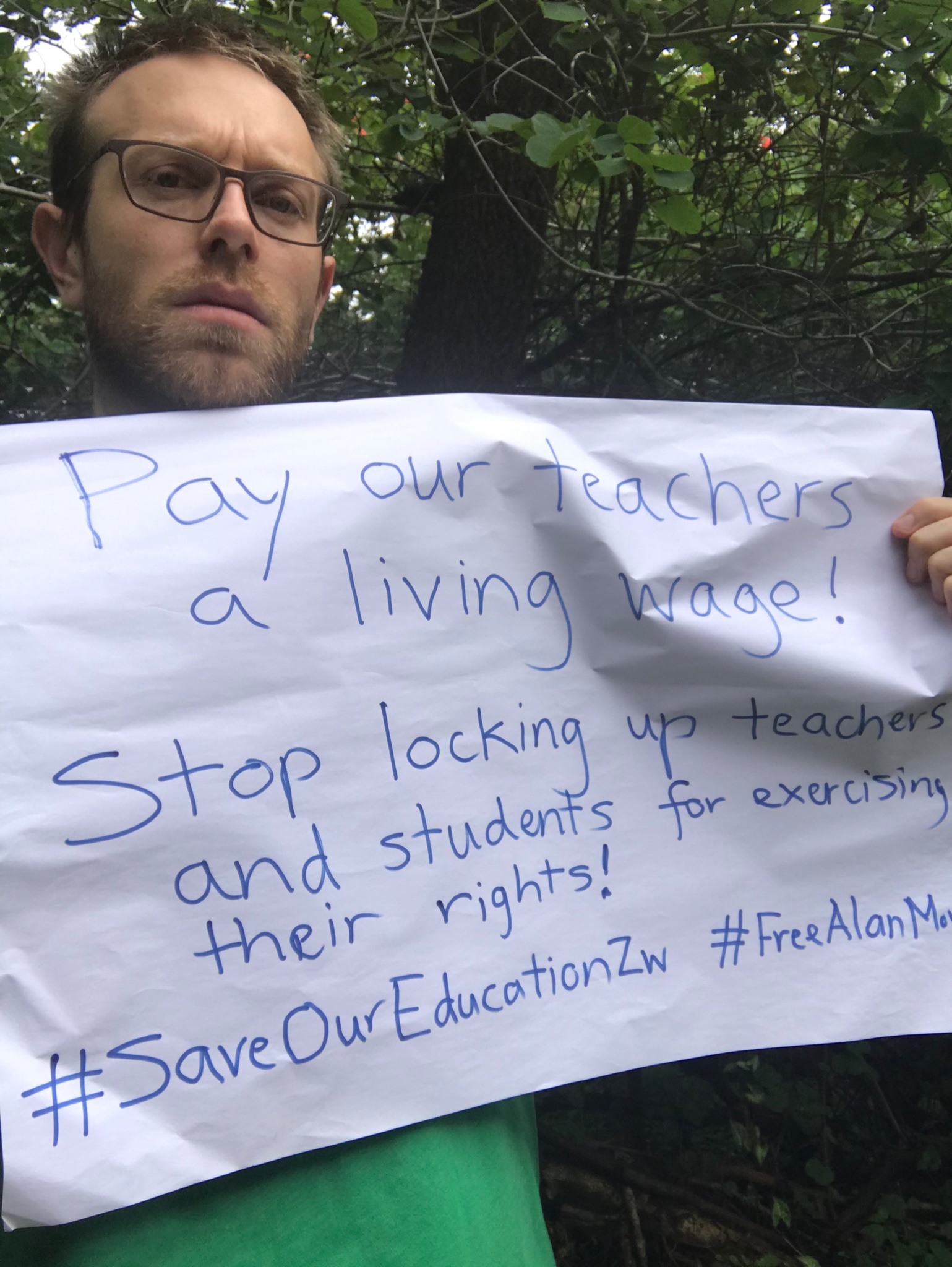
The Zimbabwe Congress of Trade Unions (ZCTU) also expressed solidarity, calling on Mnangagwa to “restore teacher dignity by paying them decent salaries. Workers of Zimbabwe please add your voice and help in calling the authorities to stop destroying the education sector.”
A 2017 report by ZimStats revealed that less than 10 percent of schools in Zimbabwe had access to computers, electricity, and the internet.
Under Mnangagwa, the country’s budgetary allocations towards education have consistently remained below 13 percent.
Over 80 percent of the education budget allocation is consumed by wages, leaving schools unable to improve their infrastructure.