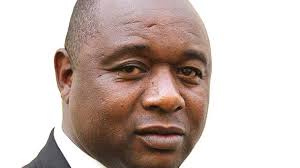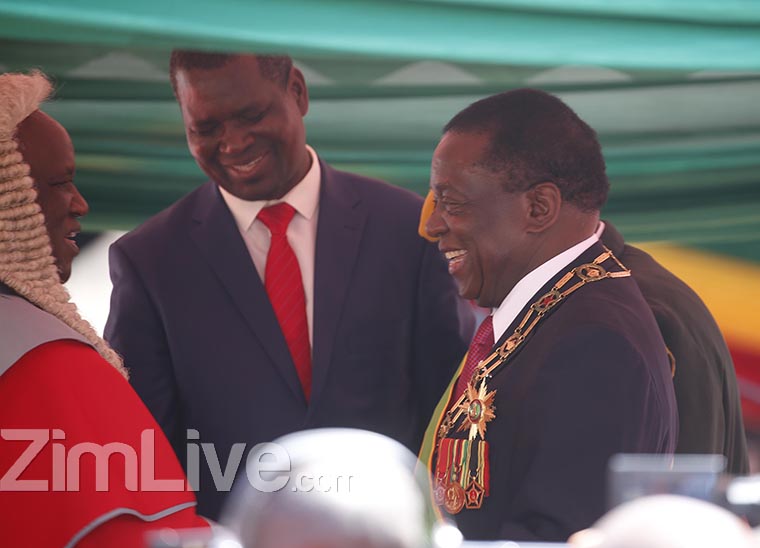

Transcript of comments made by Citizens Coalition for Change MP Thomas Muwodzeri (Ruwa) in the National Assembly on June 4, stating his opposition to Constitution of Zimbabwe Amendment (No. 3) Bill:
I RISE to address this august House in opposition to the Constitutional Amendment Bill No. 3. I do so conscious of the gravity that attaches to any proceeding, which seeks to alter the supreme law of this land.
The Constitution is not just a legislative instrument. It is the covenant between the State and its citizens, the foundation architecture of our republic, the embodiment of the aspirations of the people who fought, bled and sacrificed their sovereign self-determination. A social contract between the people of this land; to amend it is a constitutional betrayal of the people.
I have studied the report of the Joint Portfolio Committees laid before this House. I commend the Committee for the diligence it has brought to process.
I begin with commendation for the only right where the Committee has been correct; this House should say so loudly. The Committee’s recommendation that Clause 21 should not be adopted and that the status quo on the political neutrality of traditional leaders should be preserved is constitutionally sound and democratically principled and worthy of praise.
Section 281 of the Constitution read together with Sections 163 (1) (f), 165 (4) (a) and 283 (c) (iv), establishes a coherent and deliberate constitutional scheme. The scheme is premised on a fundamental truth that traditional leaders serve communities, not political parties. They are the custodians of the customary law and communal justice. They preside over matters of inheritance, land allocation and community dispute resolution in their capacity as judicial officers under our constitutional framework.
To permit them to engage openly in partisan political activity is not just ignorant but it is a constitutional contradiction. Section 165 (4) imposes upon judicial officers a duty of impartiality that is non-negotiable.
Traditional leaders who exercise judicial functions cannot simultaneously hold political allegiance without destroying the neutrality upon which the legitimacy of their judicial role depends. A chief who campaigns for a political party at a rally on Saturday cannot credibly adjudicate a boundary dispute between a ruling party supporter and an opposition member on Monday.
The Constitution understood this, the Committee has understood this and the House must understand it.
Furthermore, in the rural communities where traditional authority is most deeply felt, political partisanship by chiefs creates conditions ripe for coercion, intimidation and the persecution of political minorities. The villagers who are most dependent on the goodwill of traditional structures for access to land and communal resources would be rendered most vulnerable. The Committee must reject and correct this clause and the House should affirm that rejection with a resounding vote to say no.
I now turn to a matter of physical logic and institutional coherence, specifically the proposal to establish yet another Constitutional Commission, the Zimbabwe Delimitation Commission. The Committee, in recommending the abdication of Clauses 11, 12 and 13, has accepted the argument that a specialised boundary drawing board is necessary. I reject that reasoning.
We are a nation that struggles to fund the Constitutional Commissions it already possesses. The Zimbabwe Human Rights Commission, the Zimbabwe Anti-Corruption Commission, the Zimbabwe Gender Commission, institutions established under Section 12 of the Constitution with a promise of adequate resources, all operate in a state of chronic underfunding. The Committee itself, in Clauses 18 and 19, heard the testimony from the Zimbabwe Gender Commission, which operates on a mere 0.02 percent to 0.04 percent of the national budget.
That is the physical reality in which we live. Yet the proponents of this Bill ask this nation to create another commission with its own secretariat, commissioner, deputy commissioners, office infrastructure, operational budget, staff establishment and its own procurement requirements to perform the function of Section 161 of the Constitution which is already invested in ZEC and which ZEC has institutional competence and existing capacity to perform.
If the concern is that ZEC delimitation exercises have been imperfect, the answer is to reform, resource and enhance accountability, not the proliferation of constitutional bodies. Every new commission is a new line item on the national budget. Every new commission is a new bureaucracy. Every new commission creates new patronage.
A nation that cannot properly fund the commissions should not create commissions it does not need.
Additionally, the Committee has suggested meticulous coordination between ZEC and the proposed delimitation commission. If the two bodies must coordinate so closely, what precisely is the utility of their separation? You have taken one institution, split it into two, doubled the administrative costs and called it efficient. This is institutional manipulation masquerading as reform.
The proposed transfer of voter registration and maintenance of the voters’ roll from ZEC to the Registrar-General represents one of the most constitutionally alarming provisions in this Bill. The House must not have a short memory. The very reason voter registration was removed from the Registrar-General and placed in ZEC was institutional credibility. The voters’ roll under the Registrar-General was – to use the most restrained available language – the subject of profound public concern regarding manipulation, partisan management and executive interference.
ZEC was established under Section 238 of the Constitution as an independent constitutional Commission precisely to insulate the electoral process from the executive. The Shona have a saying tavakukanganwa chazuro nehope.
Section 235 (1) (b) of the Constitution mandates that independent commissions must be independent and must not be subject to the direct control of anyone. The Registrar General is a government department headed by a public servant who answers to the minister and to the president. There is no constitutional independence whatsoever.
Furthermore, ZEC has on record opposed this transfer. ZEC has invested substantially in biometric voter registration systems and a poll-based voting architecture introduced in 2018. They are not rival investments; they represent the national infrastructure of electoral integrity. To dismantle and transfer the infrastructure to a body with no equivalent technical capacity, no equivalent constitutional independence and no equivalent track record in biometric electoral management is to trade institutional advancement for institutional regression. This is not efficiency. This is executive capture addressed in administrative language.
The argument that the model reduces electoral violence is an admission of institutional failure not a constitutional solution. If our presidential elections are violent, the answer is a reformed, strengthened law enforcement to lead the prosecution of perpetrators of electoral violence. The answer is not to remove the vote from the citizen altogether. You do not cure electoral violence by abolishing elections.
Clauses 4 and 9 tend to propose the extension of the electoral cycle from five to seven years with explicit application to the incumbent holder of the office of the President and Members of Parliament. On this point, the Constitution speaks with unmistakable clarity.
Section 328 (7) provides in express terms, that any amendment to a provision of the Constitution that extends the term of office of the President shall not apply to the person who holds the office at the moment the amendment is done. That provision is not ambiguous. It admits no judicial interpretation that would permit its circumvention. It was placed in the Constitution as a deliberate safeguard against precisely the kind of term manipulation that has disfigured so many African constitutions.
Section 328 (7) is not a preference. It is a prohibition of what we see being attempted in this august House. Parliament can amend the Constitution but Parliament cannot amend a constitutional provision by passing an amendment that violates the very terms of the provision. An amendment in breach of Section 328 (7) is not only politically questionable; it is constitutionally void and ab initio. A Parliament that purports to pass it and an executive that purports to benefit from it, are acting in defiance of the supreme law of the land.
The seven-year term as a matter of policy, I have strong reservations even on that score. The application of those terms to the incumbent President is constitutionally impermissible. The Committee has failed to address this with the seriousness in its demands. The House must not repeat that failure. again let’s vote emphatically no for this amendment.
The functions of the Defence Forces, Clause 16. I come now to what I regard as the most constitutionally dangerous provision in the entire Bill, Clause 16, which proposes the amendment of Section 212 of the Constitution governing the function of the Defence Forces.
Section 212 of the current Constitution mandates that the Defence Forces of Zimbabwe exist to defend Zimbabwe, to protect its integrity, its territory and sovereignty and to uphold its Constitution. The Constitution’s fidelity obligation of the Defence Forces is not incidental. It is fundamental. It is what distinguishes professional defence from a partisan instrument of political power. The amendment proposes to limit and reconfigure the functions of the defence forces in ways that the proponents claim will reduce undue military influence in civilian governance.
I put it to you and to this House, this amendment does not reduce military influence in governance. What it does, what should alarm every Member of this House regardless of political affiliation, is to strip the defence forces of their constitutional mandate to uphold the Constitution itself. Consider what that means in practice. The obligation to uphold the Constitution is the legal basis upon which the defence forces may, in extreme cases, resist unconstitutional conduct, including unconstitutional conduct by the executive itself.
This is not a military theory. This is a matter of constitutional architecture. A defence force that is no longer constitutionally mandated to uphold the Constitution becomes, by necessary implication, a force accountable only to its command hierarchy.
Command hierarchies are appointed by and answerable to the president. The consequence of this transformation is the constitutionally anchored military turning into an instrument of executive will. The minority submissions on this clause warned correctly that the amendment would dilute the military’s fundamental commitment to uphold and protect the supreme law of the land. Dilute is too general a term. The removal of constitutional fidelity obligation does not dilute the commitment, it extinguishes. It converts the constitutional duty into a discretionary act.
Furthermore, the argument that the amendment is necessary to prevent military interference in civilian government is constitutionally secular. The existing constitutional framework already delegates the powers of law and defence forces. The principle of civilian supremacy over the military is already embedded in our constitutional order. If there are instances of improper military conduct in civilian affairs, those instances are governed by existing law, by the principles of the civilian oversight and accountability mechanisms of Parliament itself. They are not cured by removing the constitutional foundation of military loyalty to the supreme law.
I say to this House with the utmost gravity, a government that disempowers its own military from the constitutional obligation to defend the Constitution is a government that has something to fear from a constitutionally faithful military. As well, a government that fears a constitutionally fearful military is a government that intends to act unconstitutionally. This House must reject Clause 16 in its totality.
Clause 15 proposes to invest the appointment of judges in the President, power to be exercised in consultation with the Judicial Services Commission (JSC). The word ‘consultation’ in constitutional law carries a specific and well-understood meaning. It does not mean concurrence, it does not mean approval, it does not mean the President must hear the views of the JSC, he is entirely free to disregard them. This is not a safeguard; it is an appearance of safeguard without the substance of one.