BULAWAYO – The Zimbabwe Energy Regulatory Authority (ZERA) on Wednesday announced a shock increase in fuel prices, the second in March, citing rising cost pressures caused by the Iran war.
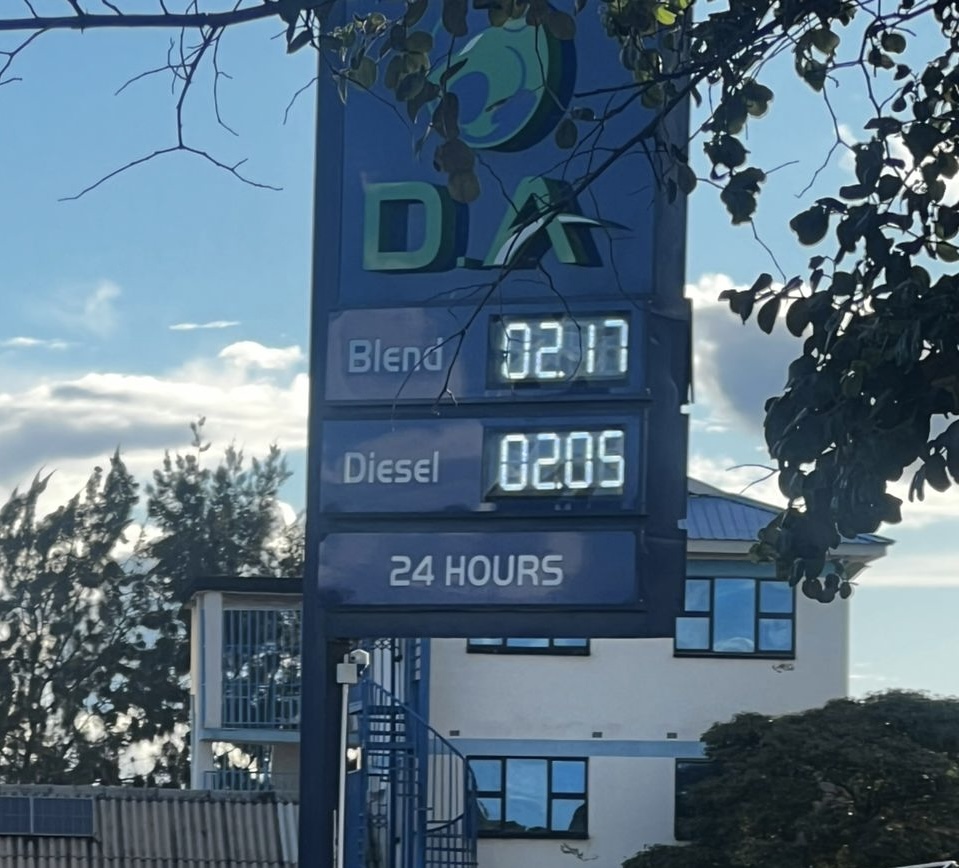
Diesel, whose price was fixed at $1.77 only on March 4 from $1.52 previously, is now $2.05 while petrol jumps from $1.71 to $2.17. Petrol was $1.56 in February.
ZERA insists Zimbabwe has more than three months’ worth of fuel stocks to avert a national shutdown. It is working with oil traders to secure alternative supply routes not affected by the ongoing Middle East conflict.
“Cost pressures are piling up, and these require that prices be reviewed… to avoid fuel shortages and arbitrage,” ZERA said.
The government added it is intervening to cushion key sectors, noting diesel prices could have reached around US$2.20 per liter without such measures.
Officials also said steps are being taken to ensure fuel availability across the country, particularly in remote areas, with Petrotrade and NOIC expected to play a role.
In a policy shift, the government has approved the importation of diesel by road with immediate effect, alongside pipeline and rail options.
The latest increase follows a price review earlier this month, which saw diesel and petrol costs rising sharply from their previous levels.
That adjustment quickly triggered fare hikes in the public transport sector, as commuter omnibus operators moved to offset higher operating costs.
In Bulawayo, trips from the city centre to high-density suburbs went up from around US$0.50 to US$1, doubling in price, while in Harare, fares on some routes increased from about US$1.50 to US$2.
Across the country, minimum fares were adjusted upwards, with higher charges during peak periods becoming more common as operators responded to fuel price pressures.
Transport operators say fuel remains their biggest expense, meaning price increases are almost immediately transferred to commuters, worsening the cost of living.
The latest adjustment is expected to trigger another round of fare increases, placing further strain on urban commuters already battling high daily travel costs.
The new pressure on worldwide oil prices came after Iran on Wednesday attacked energy facilities across the Middle East in retaliation following a strike on its South Pars gas field, a major escalation in the war with the United States and Israel.
QatarEnergy said Iranian missile attacks on Ras Laffan, the site of Qatar’s core LNG processing operations, caused “extensive damage” to its energy hub.
Saudi Arabia said it intercepted and destroyed four ballistic missiles launched on Wednesday toward Riyadh and an attempted drone attack on a gas facility.
Iran issued evacuation warnings before its attacks for several oil facilities across Saudi Arabia, the UAE and Qatar, as it prepared to retaliate for strikes on its own energy infrastructure in South Pars and Asaluyeh.
South Pars is the Iranian sector of the world’s largest natural gas deposit, which Iran shares with U.S. ally Qatar on the other side of the Gulf.
Israel carried out the South Pars gas field attack, but the United States and Qatar were not involved, President Donald Trump said late on Wednesday.
He added that Israel would not further attack Iranian facilities in South Pars unless Iran attacked Qatar, and warned that the United States would respond if Iran acted against Doha.
The United States is considering deploying thousands more troops to reinforce its operation in the Middle East, in preparation for the next steps of its campaign against Iran.
The target would be providing safe passage for oil tankers through the Strait of Hormuz, which would involve primarily air and naval forces.