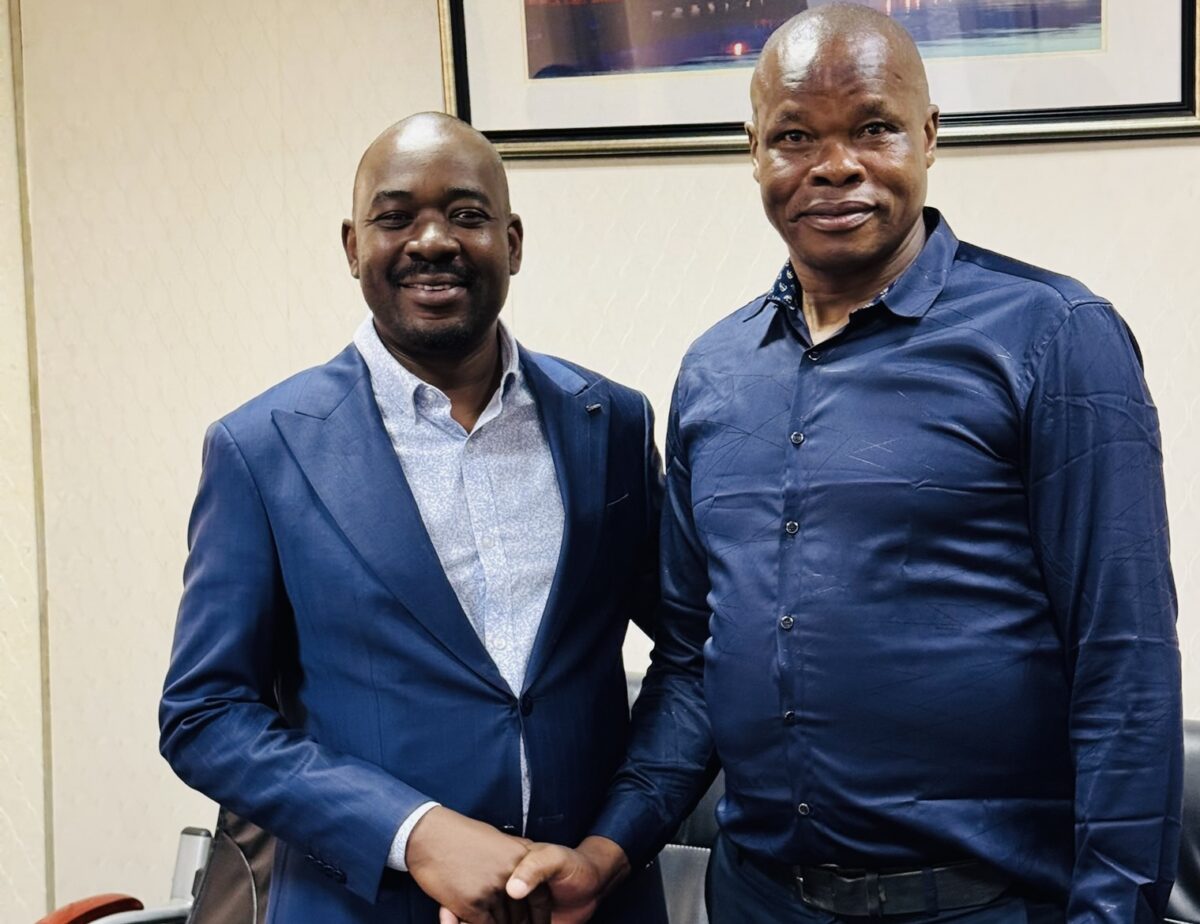
HARARE — Former Citizens Coalition for Change leader Nelson Chamisa has proposed the formation of a “transitional government” while urging President Emmerson Mnangagwa and his Zanu PF party to withdraw a bill that would extend the president’s term by two years.
Chamisa, who announced his political comeback after a two-year hiatus, did not specify who would lead such a government or under what legal framework it would operate.
Writing on X, he said: “Everywhere I go, I meet Zimbabweans who are worried about the country’s direction and future. Regardless of age, profession, or location, many share a deep concern about the path the nation is taking and the dangers the country faces in the context of the unilateral, unpopular and anti-people constitutional amendment.
“The wisest thing is to withdraw this #CAB3 from parliament and constitute a transitional government that will address all the challenges our country faces. It’s doable.”
Parliament is currently debating the Constitution of Zimbabwe Amendment (No. 3) Bill, 2026, which would extend Mnangagwa’s term by two years to 2030, despite criticism from a fractured opposition and some veterans of the liberation war.
Mnangagwa, 83, is constitutionally required to step down in 2028 after serving two five-year terms, but Zanu PF wants to amend the constitution to extend presidential terms from five years to seven. The party also wants future presidents elected by parliament rather than by direct popular vote.
Political analysts expect the bill to pass. Zanu PF holds a two-thirds majority in the lower house and controls the Senate through traditional leaders and other proxies who generally vote with the ruling party – giving it the numbers to change the constitution unilaterally.
Until recently, Chamisa had been notably muted on the planned amendments.
His call for a transitional government appears rooted in his longstanding claim that he and his then-CCC party were robbed of victory in the 2023 general elections.
On Wednesday, he wrote that “we defeated Zanu PF comprehensively and conclusively,” pointing to comments by Justice Minister Ziyambi Ziyambi, who – while justifying the cancellation of elections in 2028 – acknowledged that the move was designed to avoid the toxicity and disputes of a contested outcome.
Political analyst Tadini Masaya said Chamisa’s intervention risked muddying the waters at a critical moment in the constitutional debate.
“Preaching such a gospel at this hour completely confuses the resistance,” Masaya said. “When the enemy is actively breaching the outer wall, you do not send a delegation to discuss sharing the living room.”