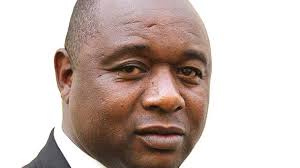
As parliament considers the Constitution of Zimbabwe Amendment Bill (No. 3) which would scrap the popular election of the president in favour of a vote by Members of Parliament, we republish a seminal article by Eddison Zvobgo, the late former minister instrumental in a 1987 constitutional change that introduced the executive presidency. He argues a direct election “is conducive to national unity as the entire nation is called upon to participate in the election of the national leader.”
THE history of our party, Zanu PF, is a history of continuous struggle against a colonial and alien political and economic system. It is therefore a history of struggle for self-determination.
Zanu PF had from its inception the enormous task not only of overthrowing the colonial system but also of transforming the many institutions that supported and buttressed that system.
Throughout the past two decades, the party has had to work out the form and character of party and governmental institutions that would best serve the people of Zimbabwe. Together with the people we fought and overcame colonial settlerism and we made history. Together with the people we continue to make history today.
The introduction of the Executive Presidency in Zimbabwe is a historical component in our struggle for the establishment of institutions that are most suited to our needs, to the needs of our country and people. The constitution of Zanu PF since 1963 has never recognised a dual leadership, a split between real and formal power as exemplified in the offices of Prime Minister and President under the Lancaster House Constitution.
In terms of our party constitution we have always recognised and functioned on the basis of a presidency that is executive in character. Our conception of leadership in the party as well as in government has throughout our existence been of one popularly and democratically elected leader. The introduction of an executive presidency is therefore not a 1987 innovation by the party. It is not as if in 1987 we suddenly woke up to the fact that a titular presidency was undesirable in our political system. We have always wanted the executive presidential system similar in all respects to the kind of presidency that we have had in the party.
However, several factors made it impossible for us to introduce the form of presidency of our choice until 1987.
At the Lancaster House Conference in 1979, a parliamentary executive system of government, with a titular president as Head of State and a Prime Minister as Head of Government, was foisted upon us. We objected to this duality of leadership in government but eventually accepted it as part of a package, as part of the overall compromise arrangement to bring an end to the war of national liberation. This acceptance of a parliamentary executive was not a change of principle or policy by the party; rather, the party saw it as one of the temporary setbacks in our struggle for genuine self-determination.
In terms of the Lancaster House Constitution, meaningful constitutional changes could only be made after seven years from the date of Independence because a number of provisions in that constitution were either directly entrenched or indirectly “entrenched by infection.” A piecemeal approach to constitutional change, we thought, was not conducive to a healthy development of our institutions. However, when the seven years expired we took the first available opportunity to change certain fundamental provisions of the Lancaster House constitution. We have abolished the specially reserved white seats in parliament and have now introduced the executive presidency.
In order to understand the party thinking on the introduction of the executive presidency, it is important to appreciate some of the negative aspects of a parliamentary executive such as we have had under the independence constitution.
The parliamentary executive system requires that we have two leaders – one with real power, and the other with no power, i.e. a Prime Minister and a President respectively. The presidency in such an arrangement is an imitation of the British Monarch. Although the president has some constitutional functions, he has no power of his own either to make decisions or to implement policy. He can only act on the advice of the Prime Minister. In effect it is the Prime Minister and his cabinet who run the government.
The anomaly of such an arrangement is that whereas the Prime Minister is the one who wields real power, he has no authority qua Prime Minister, because executive authority is vested in the titular president. The whole arrangement is, to say the least, very confusing. The majority of our people cannot understand the separation of functions between the prime ministership and the presidency. Who is who becomes the question in many minds.
The parliamentary executive is not only confusing, it also blurs the line of authority and derogates from one of our Party’s fundamental principles that the people must directly participate in the election of their leader. So we have corrected all this. In terms of the Constitution of Zimbabwe (No. 7) Act, 1987, we have provided for the direct election by popular vote of an Executive President, except for the first election in 1987 where the Executive President is to be elected by an Electoral College more for practical reasons than for any other.
We believe that where the people go to the polls to elect their president, not only do they identify themselves with their choice of the person to be their president, but their participation in national matters is enhanced. They are enabled to exercise one of their inalienable rights to choose a leadership for themselves.
This process, we think, is conducive to national unity as the entire nation is called upon to participate in the election of the national leader.
At the second congress of the party held from August 8 to 13, 1984, Thesis Five on Justice and Constitutional Affairs, the party resolved that “Government shall bring about an Executive Presidency without undue delay.” This resolution was a reaffirmation of the party’s position since 1963. In 1987 we have introduced the Executive Presidency and thus we have fulfilled one of the major resolutions of the second congress.
When the party decided to introduce the Executive Presidency, it had of course in due course to nominate its candidate for the post of president. The party chose its President and First Secretary, Comrade Robert Gabriel Mugabe. As with the introduction of the Executive Presidency, it is important for all our party cadres to appreciate the reasons for the choice of Cde. Robert Gabriel Mugabe as its candidate for the presidency.
In 1963, when Zanu PF was founded, the Party chose Ndabaningi Sithole as its president in the mistaken belief that he was committed to the struggle for independence. Little did the party know that Ndabaningi was committed only to himself. When the struggle called for selflessness, Ndabaningi proved himself to be selfish; when it called for sacrifice and the utmost dedication, he wavered; when it wanted strong leadership, he was weak.
On the principle that leaders come and go but the party remains, Ndabaningi was thrown out. It was during these difficult years that the mettle of Comrade Mugabe was clearly shown. When selflessness and self-sacrifice was called for, he emerged as the one most prepared to sacrifice himself and showed a degree of selflessness without comparison. When strong principled leadership was lacking in Ndabaningi, Comrade Mugabe provided it.
It was in recognition of his dedication to the struggle, his selflessness, and his abilities that at the conference of the party Central Committee at Chimoio in 1977, he was chosen as president of the party.
This is but a very brief synopsis of the events leading to his election as president. In detail mention must be made of the Mgagao document which rejected the leadership of Sithole and asserted that the only leader the party could accept as its spokesman was Comrade Mugabe. This was in 1976.
The party in its choice of Comrade Mugabe has been happier ever after. Comrade Mugabe, together with the leadership of the party, guided, directed and prosecuted the war of liberation until final victory.
At Lancaster he fought against reactionary elements and ensured the advent of true independence. Through his leadership, the party won the crucial 1980 general election which was a resounding victory and has continued to score greater victories as in the 1985 general election. Since independence, Comrade Mugabe’s leadership has fostered national unity, political stability and economic development far in excess of anything known in this country before.
As a true servant of the people he has brought the party to a second congress for the people to exercise their choice of leadership democratically. He has in short proved himself an able leader both of the party and of the government of Zimbabwe and has become the envy not only of African countries but of many other countries too.
When the party chose him as the presidential candidate it reaffirmed its unwavering support for this great man. There could not have been a better choice. Apart from all this, however, and in any case, the president of the party is the natural and obvious choice for president of the country.
Long live the Executive Presidency!
Eddison Zvobgo was a lawyer and held various ministerial portfolios, including serving as justice minister and minister of parliamentary and constitutional affairs. This article was originally published in the Zanu PF official mouthpiece, Zimbabwe News, on December 13, 1987