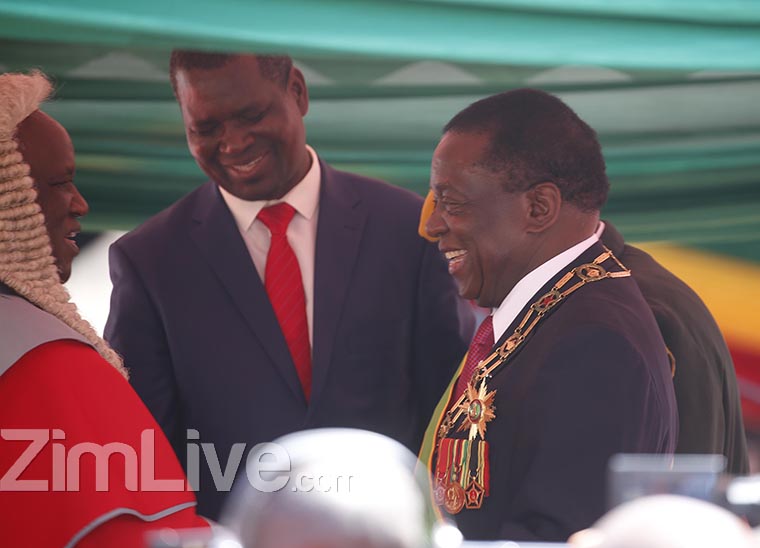
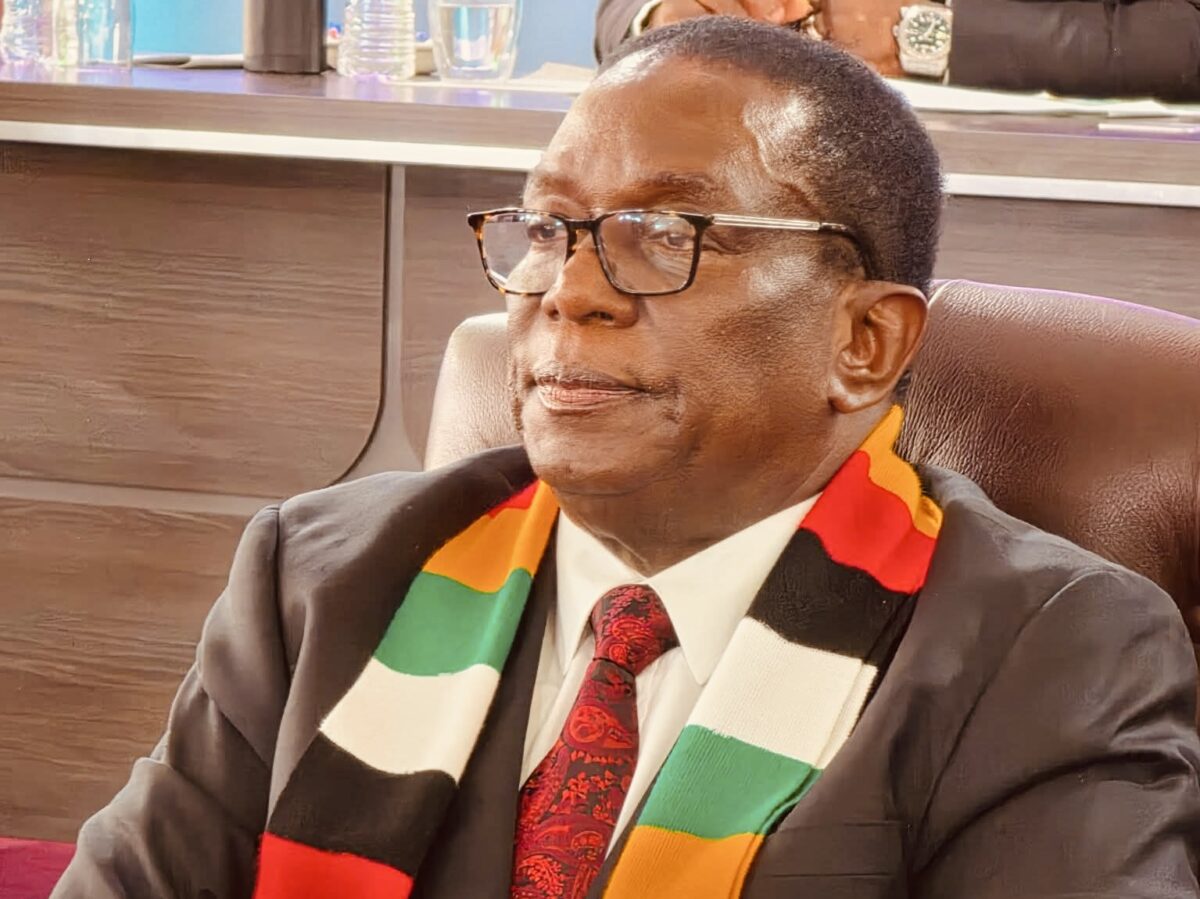
HARARE – The Senate on Wednesday approved a bill to extend presidential terms from five to seven years, paving the way for President Emmerson Mnangagwa to remain in office until 2030.
Seventy-five senators voted in favour of the Constitution of Zimbabwe Amendment (No. 3) Bill, while four voted against it – well clear of the 54 votes needed for the required two-thirds majority. There was one abstention.
Zanu PF, which has 33 senators against the opposition Citizens Coalition for Change’s 27, did not on its own command a two-thirds majority. But 18 traditional leaders and two representatives for persons with disabilities, who generally vote with the ruling party, helped close the gap.
Even so, the bill would not have passed without the support of CCC senators aligned to Sengezo Tshabangu, who seized control of the party’s structures after the 2023 elections with the backing of Zanu PF and the courts.
Tshabangu recalled more than 20 CCC legislators from parliament and Zanu PF went on to win most of the resulting by-elections, while Tshabangu used his control of the party to fill remaining proportional representation vacancies, including Senate seats, with loyalists.
Only four opposition senators voted against the Bill: Sesel Zvidzai of Midlands, Solani Moyo, Meliwe Phuthi and Nonhlanhla Mlotshwa, all of Matabeleland South.
Tuesday’s Second Reading debate had given an early indication of the fracture lines within the CCC bench. Senator Solani Moyo, also of Matabeleland South delivered an uncompromising rejection of CAB3 in debate, while senators Linda Sibanda, Kudakwashe Matibiri and Tapfumanei Muzoda each signalled qualified or partial support for the bill even as they raised specific reservations.
The bill also provides for the president to be elected by parliament rather than directly by voters, a change debated extensively in Tuesday’s sitting. It will become law once signed by Mnangagwa.
Signs that Mnangagwa, 83, wanted to extend his time in office beyond the end of his second term in 2028 first emerged roughly two years ago, when his supporters began chanting slogans at Zanu PF rallies asserting that he needed more time to complete his agenda. The ruling party resolved last year to pursue the constitutional changes, a plan that received cabinet backing in February.
Mnangagwa came to power after a 2017 military coup ousted longtime leader Robert Mugabe, who had governed Zimbabwe since independence in 1980.
Critics say the bill is a vehicle for Mnangagwa to extend his hold on power, while its backers argue it will strengthen accountability and foster political stability.