HARARE – Zimbabwe’s sole lithium sulphate plant, owned by China’s Zhejiang Huayou Cobalt currently has no capacity to process minerals from other producers, an official said on Friday ahead of a concentrate export ban next year.
Africa’s top lithium producer will implement the ban from January to push miners to process more of the battery metal domestically, generating higher-value export earnings and creating more jobs in its economy.
Lithium miners have pleaded for more time to build processing capacity, but the government has told them to send their concentrates to local plants.
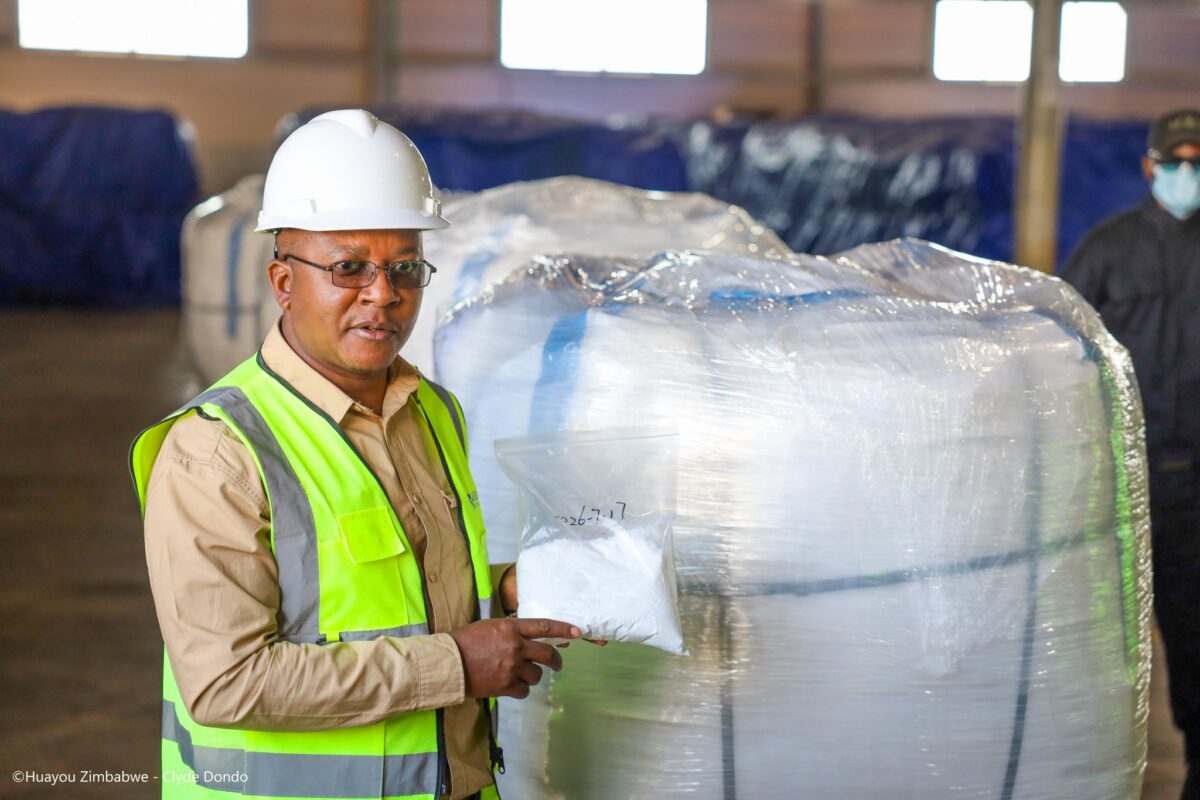
While a number of plants are under construction in the country, so far only one has been completed, and its operator, Prospect Lithium Zimbabwe, owned by Zhejiang Huayou Cobalt, says it has no capacity for third-party material.
“We don’t have the capacity to process other minerals from outside. Our concentrator plant produces around 400,000 tons per annum, so we don’t have space for other players,” mine manager Mthokozisi Goliath said during a visit to the mine by mines minister Polite Kambamura.
“For now, this (sulphate) plant only has capacity that can manage what we produce at the concentrator plant,” he added.
Speaking during the visit, Kambamura insisted that the concentrate export ban would still come into effect early next year.
“The January 2027 deadline is still on. We cannot talk of extending right now. We would like to urge all producers to stick to that deadline,” the minister said.
Sinomine Resource Group’s Bikita Minerals and Kamativi Mining Company, the Zimbabwean subsidiary of China’s Yahua Group, are in the process of building plants which are unlikely to be ready by January 2027.
Chinese firms dominate Zimbabwe’s lithium sector after investing about $2 billion in mining and processing plants since 2021, consolidating the Asian giant’s grip on the global battery metal supply chain. – Reuters